 how-to
How to Maintain Your Patio Enclosure: 2026 Guide
Table of Contents
- How to Maintain Your Patio Enclosure: A Step-by-Step Cleaning Plan
- How to Clean Patio Screens Without Damaging Them
- Aluminum Screen Enclosure Maintenance: Frames, Tracks, and Hardware
- Seasonal Patio Enclosure Maintenance: A Month-by-Month Schedule
- Patio Enclosure Winter Preparation: Protecting Your Investment
- Common Mistakes to Avoid and When to Call a Professional
- Frequently Asked Questions
Last Updated: October 5, 2026
How to Maintain Your Patio Enclosure: A Step-by-Step Cleaning Plan
Learning how to maintain your patio enclosure comes down to one simple routine: clear the debris, wash the surfaces, rinse everything down, and keep the moving parts working. Do that on a schedule, and a patio enclosure can stay bright and functional for decades. Skip it, and you'll be replacing screens and hardware years before you should.
Milton Sunrooms has proudly served homeowners across Milton and north Fulton County since 2008, specializing in the custom design and construction of sunrooms, porches, and patio enclosures. The good news? Maintenance is not hard. It's just consistent.
Below, we'll walk through a full cleaning plan, then cover the seasonal schedule and winter prep that most guides skip.
What You'll Need: Tools and Cleaners
Gather these before you start. Nothing here is expensive, and you likely own most of it already.
- A soft brush and a sponge
- A microfiber mop or soft cloth
- Mild soap or gentle detergent
- Warm water in a bucket
- A garden hose with a spray nozzle
- A vacuum with a brush attachment
- Glass cleaner for glass panels
- Silicone spray or a dry lubricant for hardware
Skip harsh chemicals, bleach, and abrasive pads. They dull aluminum frames and can cloud screen material. A simple mix of mild soap and warm water handles almost everything.
How to Clean Patio Screens Without Damaging Them
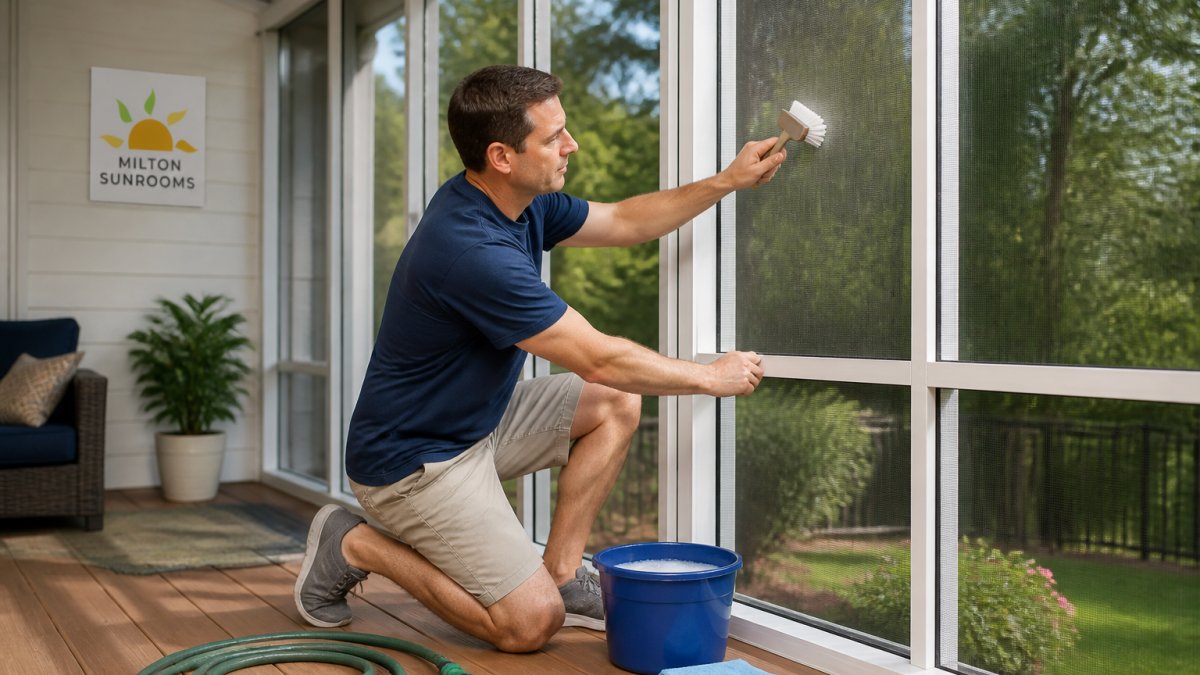
The safest way to clean patio screens is gentle pressure and the right tools: vacuum first, then wash with mild soap and a soft brush, then rinse with a hose on a low setting.
But "screen" is not one material. Match the method to what you actually have.
Fiberglass screen (the most common). Woven from vinyl-coated fiberglass strands. It tolerates mild soap, warm water, and a soft brush, but it stretches under pressure and tears at the frame edge if you scrub against the spline.
Aluminum screen. Stronger and more rigid, but the wire can crease permanently if you press hard, and it oxidizes into gray streaks if left wet against the frame.
Solar and privacy screen. These are woven denser and often coated. Abrasives and stiff brushes fray the weave. A soft brush and mild soap only, and never a pressure washer, the fabric delaminates.
Vinyl panels (in three-season and four-season rooms). Vinyl is not glass. Ammonia-based glass cleaner can cloud it over time, and paper towels scratch it.
Glass panels. Standard glass cleaner works, but hard water spots need a diluted vinegar-and-water mix. Rinse within a few minutes so the acid doesn't sit on the aluminum frame or the sealant.
Here's the step-by-step process:
- Vacuum loose dust. Run a brush attachment over the screens to lift dust and pollen before it turns into mud.
- Mix your solution. Add a few drops of mild soap to a bucket of warm water.
- Wipe gently. Use a sponge or soft brush in light, even strokes. Don't press hard.
- Rinse with a hose. Keep the spray on low. A hard stream can stretch or tear screen material.
- Air dry. Let screens dry on their own. A soft cloth works for frames, not screens.
For stubborn spots, a second pass with the same mild solution usually does it. Patience beats pressure every time.
Cleaner and tool do-and-don't guide
| Use this | Not this |
|---|---|
| Mild dish soap or gentle detergent | Bleach, ammonia, or abrasive cleansers |
| Soft brush, sponge, microfiber cloth | Stiff-bristle brush, steel wool, scouring pads |
| Garden hose on low spray | Pressure washer at any setting |
| Diluted vinegar for hard water spots | Undiluted acid left to sit on frames or seals |
| Silicone or dry lubricant on hardware | Oily sprays that collect grit |
Aluminum Screen Enclosure Maintenance: Frames, Tracks, and Hardware
Aluminum screen enclosure maintenance is where most homeowners fall behind. Frames and panels are easy to see, so they get cleaned. Tracks, rails, hinges, and locks are out of sight, and that's exactly where problems start.
Clean the tracks and rails. Dirt and grit collect in the channels where panels slide. Vacuum them out, then wipe with a damp cloth. A dry track keeps panels gliding smoothly and prevents that grinding sound.
Lubricate the moving parts. Apply a silicone spray or dry lubricant to hinges, locks, and rollers once or twice a year. Avoid oily products that attract dust.
Inspect the hardware. Check for loose screws, worn rollers, and sticky latches. Tighten what you can. Replace small parts before they fail.
Wash the frames. Wipe aluminum frames with mild soap and warm water, then rinse. This removes salt buildup and grime that can pit the finish over time.
Seasonal Patio Enclosure Maintenance: A Month-by-Month Schedule
Seasonal patio enclosure maintenance follows a simple rhythm: deep clean in spring, stay on top of it through summer, prep for cold in fall, and inspect in winter. Break it into a yearly calendar and you'll never be caught off guard.
| Season | Key Tasks | Frequency |
|---|---|---|
| Spring | Deep clean screens, frames, glass, tracks | Once |
| Summer | Remove pollen and cobwebs, wipe surfaces | Every 2-4 weeks |
| Fall | Clear debris, lubricate hardware, check seals | Once |
| Winter | Inspect for damage, remove snow buildup | Monthly |
Spring. Do the full clean: screens, glass panels, frames, tracks, and hardware. This is your reset.
Summer. Pollen, dust, and cobwebs build up fast. A quick wipe-down every few weeks keeps things tidy.
Fall. Clear leaves and debris from tracks and rails. Lubricate hinges and locks before the cold sets in.
Winter. Inspect monthly. Look for loose screens, cracked seals, or ice in the tracks.
Patio Enclosure Winter Preparation: Protecting Your Investment
Patio enclosure winter preparation protects the structure when temperatures drop and moisture freezes. A few hours of work in fall prevents costly repairs in spring.
Start with a thorough clean. Dirt left on surfaces traps moisture against the frame all winter. Next, clear every track and rail so nothing freezes in place.
Then check the details:
- Tighten loose screws on hinges and locks
- Lubricate all moving parts
- Inspect screen panels for small tears and patch them
- Check seals and weatherstripping for gaps
- Trim back tree branches that could drop onto the roof
During winter, remove snow gently with a soft broom. Never chip at ice with a metal tool. It scratches frames and tears screens.
Common Mistakes to Avoid and When to Call a Professional
Most patio enclosure damage comes from a handful of avoidable mistakes. Knowing them saves you money and frustration.
- Using a pressure washer. It tears screens and forces water into tracks.
- Reaching for bleach or harsh cleaners. They corrode aluminum and fade finishes.
- Ignoring the tracks. Grit wears down rollers and rails fast.
- Skipping lubrication. Dry hinges stick, squeak, and eventually seize.
- Waiting too long to patch tears. Small holes spread with every gust of wind.
A simple inspection checklist
Walk the enclosure once a season and look for these specific conditions. Catching them early is the difference between a ten-minute fix and a panel replacement.
- Loose fasteners. Check screws at hinges, corner brackets, and panel frames. A screw that backs out lets the frame rack and misalign the panels.
- Torn or stretched screen. Look along the spline where screen meets frame, that's where fabric fails first. Small tears can be patched with a screen repair kit; a tear longer than a few inches usually means rescreening the panel.
- Failing seals and weatherstripping. Run a hand along the seal between panels and frame. Gaps let water in and let conditioned air out. Most weatherstripping is inexpensive and replaceable.
- Corrosion. White or gray powdery buildup on aluminum is oxidation. It starts where water sits, track channels, the bottom rail, and around fasteners. Clean it off and keep the surface dry.
- Track problems. Panels that drag, jump, or stick usually mean worn rollers or a bent rail, not just dirt. Clean the track first; if the panel still drags, the roller or rail is the issue.
- Water intrusion. Staining on the interior floor or wall near the enclosure edge points to a seal or flashing problem, not a cleaning problem.
Repair versus replace
A single torn screen, a sticky lock, or worn rollers are routine repairs. The calculus changes when problems stack up: multiple failing seals, corrosion across the bottom rail, sagging or out-of-square frames, or repeated water intrusion. At that point, patching one issue often just reveals the next, and the cost of chasing repairs can approach the cost of rebuilding the enclosure. A builder who knows the structure can tell you which side of that line you're on.
Safety first
- Use a sturdy step ladder on level ground, never a chair or bucket. Keep three points of contact and don't overreach, move the ladder instead.
- Never lean a ladder against a screen panel. It will tear. Lean against the frame or a solid structural member.
- Do the work on a calm day. Wind turns a manageable panel into a sail and makes ladder work unsafe.
- Before a storm, secure or retract movable panels and remove anything loose inside the enclosure that could become a projectile.
- In winter, remove snow with a soft broom. Never chip at ice with a metal tool, it scratches frames and tears screens.
When to call a professional
If you spot structural damage, sagging frames, water leaking into the home, or hardware that no longer aligns, get an expert out. These aren't cleaning issues. They're repair issues, and a patio enclosure is only as strong as its frame.
If your enclosure is older and repairs are stacking up, it may be time to talk about replacement rather than patching. That's a conversation worth having with a builder who knows the structure.
Frequently Asked Questions
How often should you clean a patio enclosure?
Clean the screens and frames every two to three months during active use, and once monthly if you live near trees, pollen-heavy areas, or a golf course. Tracks and rails need attention more often because debris collects quickly. A full deep clean in spring and fall, plus a quick rinse after heavy storms, keeps your patio enclosure looking sharp and prevents buildup that can shorten the lifespan of screens and hardware.
What is the best way to clean patio screens?
Start by vacuuming or sweeping loose dirt, pollen, and cobwebs. Mix a few drops of mild soap or gentle detergent in warm water, then wipe screens with a soft cloth or sponge. Rinse with a hose on low pressure. Avoid pressure washers, which tear screen material. For stubborn spots, a diluted vinegar solution works well. Always let screens air dry completely before closing up the enclosure to prevent moisture and mold.
Can I use Dawn dish soap to clean my patio enclosure?
Yes, a small amount of mild dish soap mixed with warm water is safe for most aluminum frames and screen panels. Use only a few drops, since too much soap leaves residue that attracts dirt. Avoid harsh cleaners, bleach, or abrasive scrubbers on aluminum, as they can strip the finish. Rinse thoroughly with a hose after washing and dry frames with a soft cloth to prevent water spots.
How do you prepare a patio enclosure for winter?
Clear all debris from tracks and rails, inspect screens for tears, and lubricate hinges and locks with a silicone-based product. Check seals and caulking around frames for gaps that let cold air in. If your enclosure is not heated, remove or protect furniture and consider screen panels designed for cold weather. Trim nearby branches to prevent storm damage, and schedule any repairs before the first freeze so your enclosure stays protected through the season.