 How-to
What Thermal Efficiency in Sunrooms Actually Means
Last Updated: November 18, 2026
Quick Summary
Thermal efficiency in sunrooms is how well a room holds its indoor temperature against outside heat and cold. It measures how much heat escapes in winter, how much solar heat enters in summer, and how evenly the space stays comfortable without overworking a heater or AC unit.
- You measure thermal efficiency by tracking heat flow, not by guessing from comfort alone.
- Glass is the weakest part of any thermal envelope, so windows drive most of a sunroom's thermal performance.
- U-factor measures how fast heat escapes, and lower is better in cold months.
- A window with a great U-factor can still overheat a sunroom if its SHGC is too high.
- Skipping the roof and frames because the glass looks fine is the most common assessment error.
Table of Contents
- Thermal Efficiency in Sunrooms: The Practical Definition
- Why Energy-Efficient Sunroom Windows Do Most of the Work
- Low-E Glass for Sunrooms: What the Coating Changes
- Sunroom Insulation Beyond the Glass
- Sunroom Heating and Cooling: Closing the Comfort Gap
- Matching Thermal Performance to Your Climate
- A Step-by-Step Thermal Efficiency Assessment
- Planning a Sunroom That Stays Comfortable Year-Round
- Frequently Asked Questions
Thermal Efficiency in Sunrooms: The Practical Definition
Thermal efficiency in sunrooms is how well a room holds its indoor temperature against outside heat and cold. It measures how much heat escapes in winter, how much solar heat enters in summer, and how evenly the space stays comfortable without overworking a heater or AC unit.
At Milton Sunrooms, we explain it to homeowners as the difference between a room you use in April and October and one you abandon in July and January. The gap is rarely about the heater. It's about the thermal envelope: glass, frames, roof, and seals working as one system.
Below, we'll show you exactly how to measure thermal efficiency, compare window ratings, and spot the weak points in any sunroom.
How to Measure Thermal Efficiency in Your Sunroom
You measure thermal efficiency by tracking heat flow, not by guessing from comfort alone. Three practical methods work for homeowners:
- Compare window ratings. Check the U-factor and solar heat gain coefficient on the glass labels.
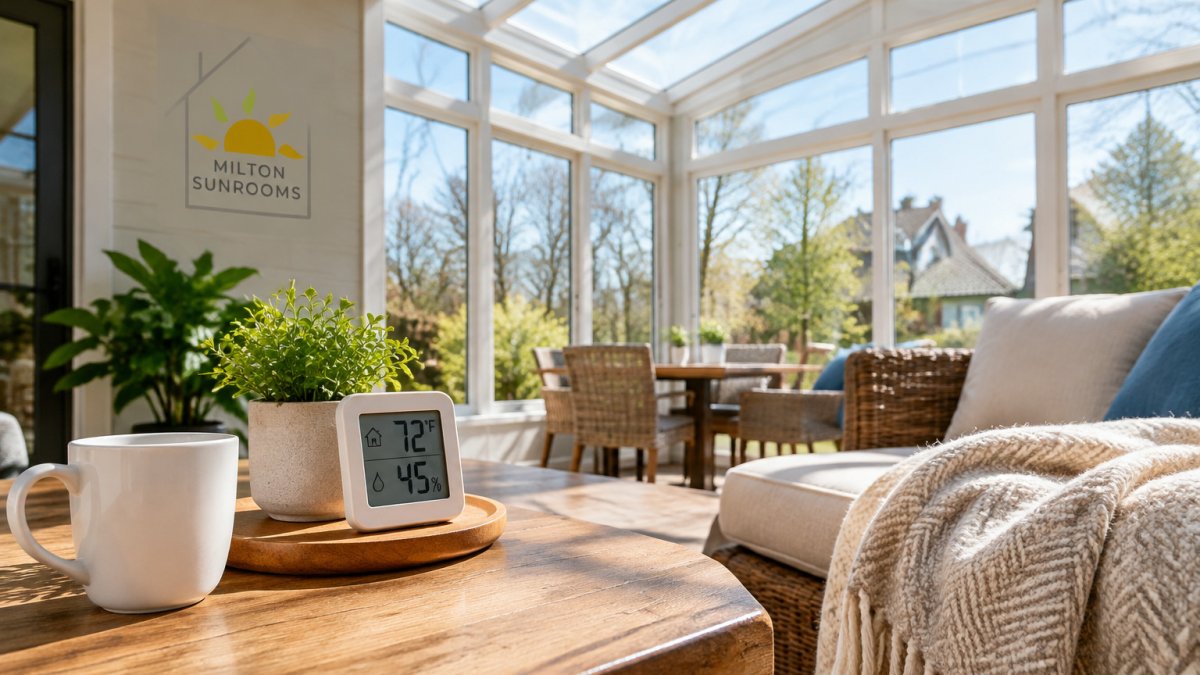
- Run a temperature gap test. On a hot afternoon, compare the sunroom thermometer to the outdoor reading. A large gap means the envelope is working.
- Check for air leaks and condensation. Drafts at seams and fogging on glass point to heat loss and poor sealing.
The temperature gap test is the simplest starting point. Note the readings at the same time of day across a week, then compare seasons.
Why Energy-Efficient Sunroom Windows Do Most of the Work
Glass is the weakest part of any thermal envelope. Heat moves through glass far faster than through an insulated wall, so windows drive most of a sunroom's thermal performance. That's why energy-efficient sunroom windows matter more than almost any other upgrade.
The U.S. Department of Energy guide to window technologies explains that heat transfer through windows happens in three ways: conduction through the glass and frame, radiation from sunlight, and air leakage around edges. Each one needs a different fix.
If you're weighing glass options now, our guide on how to choose energy efficient sunroom glass options breaks down the specific choices by performance and budget.
Comparing U-Factor, SHGC, and Visible Transmittance
These three ratings tell you different things, and you need all three to judge a window:
- U-factor measures how fast heat escapes. Lower is better, and it matters most in cold months.
- Solar heat gain coefficient (SHGC) measures how much solar heat enters. Lower blocks summer heat; higher captures winter warmth.
- Visible transmittance (VT) measures how much natural light passes through. Higher means a brighter room.
A window with a great U-factor can still overheat a sunroom if its SHGC is too high. Balance matters more than any single number.
Low-E Glass for Sunrooms: What the Coating Changes
Low-E glass for sunrooms uses a thin, invisible metallic coating that reflects heat radiation while letting natural light through. The coating cuts summer heat gain and reduces winter heat loss without making the room dark.
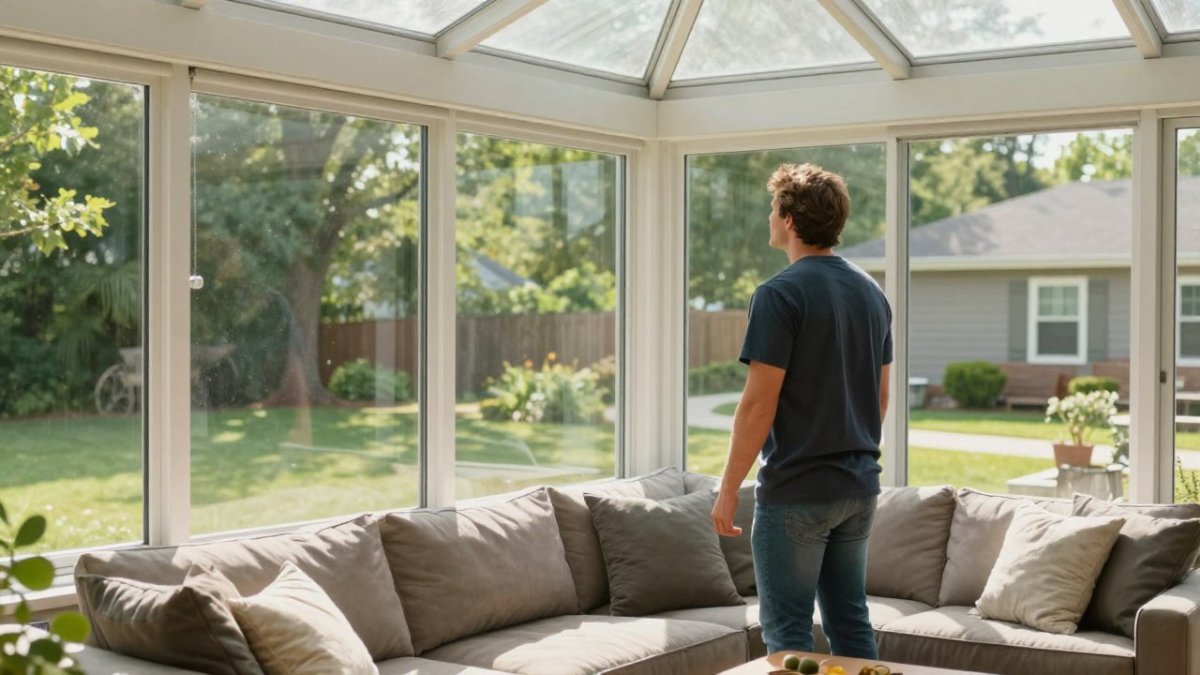
What most guides miss is the coating's role in edge temperature. Glass edges run colder than the center, and a weak edge seal invites condensation.
The trade-off: some Low-E coatings reduce visible transmittance. If a bright, sunny feel matters most to you, ask for a coating spec that keeps VT high.
Sunroom Insulation Beyond the Glass
Frames and roofs leak heat just as quietly as glass does. Sunroom insulation has to address both.
The roof deserves equal attention. An insulated roof system with proper panels and ceiling layers keeps summer heat from baking the room from above. Shading and grilles add another layer by blocking direct solar exposure before it reaches the glass.
For a deeper look at materials, our guide on how to choose sunroom materials for energy efficiency covers the options in detail.
| Weak Point | What Goes Wrong | Best Fix |
|---|---|---|
| Single-pane glass | High heat loss, cold edges | Double- or triple-pane with Low-E |
| Standard aluminum frames | Heat transfer through frames | Thermally broken frames |
| Uninsulated roof | Summer heat gain from above | Insulated roof system |
| Poor air sealing | Drafts and air leakage | Sealed seams and weatherstripping |
Sunroom Heating and Cooling: Closing the Comfort Gap
Sunroom heating and cooling works best when the envelope does its job first. A tight, well-glazed room needs far less HVAC effort to hold a comfortable indoor temperature. A leaky room fights the system all year.
A common mistake is upsizing the AC to fix a hot sunroom. That treats the symptom. If heat gain through glass and roof is the real problem, a bigger unit just runs longer and burns more energy.
Start with shading, air sealing, and glass upgrades. Then size the HVAC to what's left. For practical steps, see our year-round sunroom temperature control tips.
Matching Thermal Performance to Your Climate
Climate decides which ratings matter most, and generic advice hides that. The useful split is heating-dominated, cooling-dominated, and mixed climates, because each pushes the specification in a different direction.
Heating-Dominated Climates
Where winter drives energy use, the priorities are a low U-factor, triple-pane or high-performance double-pane glazing, thermally broken frames, and warm-edge spacers to control condensation at the glass edges. A moderate SHGC is usually welcome on south glass because winter solar gain offsets heating load. The failure mode here is a room that is comfortable in October and unusable in January because the glass edges run cold and the frame conducts heat straight out.
Cooling-Dominated Climates
Where summer heat and humidity dominate, low SHGC and strong shading come first, followed by U-factor to keep conducted heat out. West-facing glass is the usual weak point, so shading and low-SHGC glazing on that side matter more than a premium U-factor on north glass. The failure mode is a room that needs the AC running by mid-morning because solar gain through glass and roof outpaces the system.
Mixed Climates
Mixed climates force a genuine compromise: you need a low enough SHGC to survive July and a low enough U-factor to survive January, and those goals compete. The practical answer is spectrally selective glazing with a moderate SHGC, exterior shading that can be adjusted seasonally, and an insulated roof that removes the largest uncontrolled heat gain so the glass decision carries less of the load.
Seasonal Swing and Orientation
Seasonal temperature changes make this a year-round balancing act. A spec that's perfect for a mild spring can fail in a deep freeze or a heat wave. Orientation compounds it: the same window that helps on a south wall in winter overheats a west wall in summer. Map your glazing by orientation before choosing a single whole-room specification.
For homeowners in hot-summer areas, our sunroom climate control guide for hot summers walks through summer-specific strategies.
A Step-by-Step Thermal Efficiency Assessment
Use this checklist to assess any existing sunroom before you upgrade:
- Read the glass labels and record the U-factor, SHGC, and VT
- Note whether glazing is single, double, or triple pane
- Check frames for a thermal break
- Inspect the roof for insulation and ceiling layers
- Feel for drafts at seams, doors, and window edges
- Look for condensation or fogging on glass
- Run the temperature gap test on a hot and a cold day
- Note which hours the room becomes unusable
Rank each item as good, fair, or poor. The weakest items are your upgrade priorities.
Watch out: skipping the roof and frames because the glass looks fine is the most common assessment error. Heat loss hides in the details.
Planning a Sunroom That Stays Comfortable Year-Round
The best time to solve thermal efficiency is before construction starts. Retrofitting glass and frames later costs more than specifying them right the first time.
Whole-room performance is the goal, not a single great window rating. Glass, frames, roof, sealing, and HVAC have to work as one system. A sunroom with premium glass and a leaky roof still underperforms.
Milton Sunrooms specializes in the custom design and construction of sunrooms, porches, and patio enclosures across Metro Atlanta and surrounding counties, and has served homeowners since 2008. We can repurpose existing decks and porches and build to your exact specifications, with a 100% customer satisfaction guarantee.
When you're ready to plan, you can explore custom four-season sunroom construction and request a quote.
The difference between a sunroom you use all year and one you close off for two seasons comes down to the thermal envelope. Get the glass, frames, roof, and sealing right, and the room stays comfortable through every season. Milton Sunrooms brings custom design, quality materials, and expert craftsmanship to every build, from repurposing an old deck to a full new addition. Get started with Milton Sunrooms and enjoy a sunroom built to stay comfortable year-round.
Frequently Asked Questions
What is thermal efficiency in simple words?
Thermal efficiency is how well a sunroom keeps heat where you want it. In winter, it means slowing heat loss through glass, frames, and roof. In summer, it means blocking heat gain from sunlight and outside air. A thermally efficient sunroom holds a comfortable indoor temperature with less help from a heater or air conditioner, which lowers energy consumption and keeps the room usable across seasonal temperature changes.
How do sunroom windows affect thermal efficiency?
Windows are usually the weakest part of the thermal envelope, so they drive most heat transfer. Double-pane and triple-pane windows cut heat loss and heat gain compared with single panes. Check the U-factor (lower is better) and solar heat gain coefficient when comparing options. Energy-efficient sunroom windows also reduce edge temperature, which lowers condensation and drafts near the glass.
Can a sunroom be comfortable year-round?
Yes, with the right assembly. Year-round comfort comes from combining Low-E glass for sunrooms, insulated roofs, air sealing, and a dedicated heating and cooling plan. A three-season room typically relies on passive solar gain and a space heater; a four-season room adds insulation values and HVAC capacity sized for the space. Milton Sunrooms designs each room around how you plan to use it, so temperature regulation matches your expectations rather than a generic spec sheet.
What insulation is best for a sunroom?
The best sunroom insulation depends on the assembly. Roofs and ceilings usually need rigid foam board or spray foam to create a continuous barrier. Walls and knee walls benefit from batt or blown-in insulation with no gaps. Floors over an existing deck need rigid board underneath. Air sealing around joints, outlets, and frame connections matters as much as the insulation itself, because air leakage bypasses even well-installed materials.