 blog
How to Choose Year Round Sunroom Furniture Ideas
Last Updated: November 4, 2026
Quick Summary
Sunroom furniture is seating, tables, and storage built to handle strong sunlight, humidity swings, and heat gain without fading, cracking, or warping. Start with the frame and fabric, since the material decides how long each piece lasts, and let style come second.
- Resin wicker handles humidity better than natural rattan, which can dry and split near constant sun.
- Keep a main walkway of 30 to 36 inches so two people can pass without turning sideways.
- A loveseat is the right call under 150 square feet, at roughly 50 to 60 inches wide.
- Spend on seating frames, cushions, and window treatments; save on tables and decorative accents.
- Rotate cushions and chairs twice a year to even out sun fade.
Table of Contents
- Why Year Round Sunroom Furniture Ideas Start With Materials
- Small Year Round Sunroom Furniture Ideas for Tight Spaces
- Modern Year Round Sunroom Furniture Ideas With Clean Lines
- Indoor Sunroom Furniture That Blends With Your Home
- Sunroom Ideas on a Budget: Where to Spend and Where to Save
- Seating, Layouts, and Natural Light: Putting the Room Together
- Seasonal Comfort, Care, and Durability
- Planning Your Sunroom Furniture With Milton Sunrooms
- Frequently Asked Questions
Why Year Round Sunroom Furniture Ideas Start With Materials
Year round sunroom furniture ideas succeed or fail on one question: can the piece survive the room? A sunroom is a glass box.
At Milton Sunrooms, we build and enclose porches and sunrooms across north Fulton County.
Sunroom furniture is seating, tables, and storage built to handle strong sunlight, humidity swings, and heat gain without fading, cracking, or warping. The material decides how long the piece lasts.
Below: materials, small-space layouts, modern lines, budget tiers, and seasonal care.
Materials That Handle Sunlight, Heat, and Cold
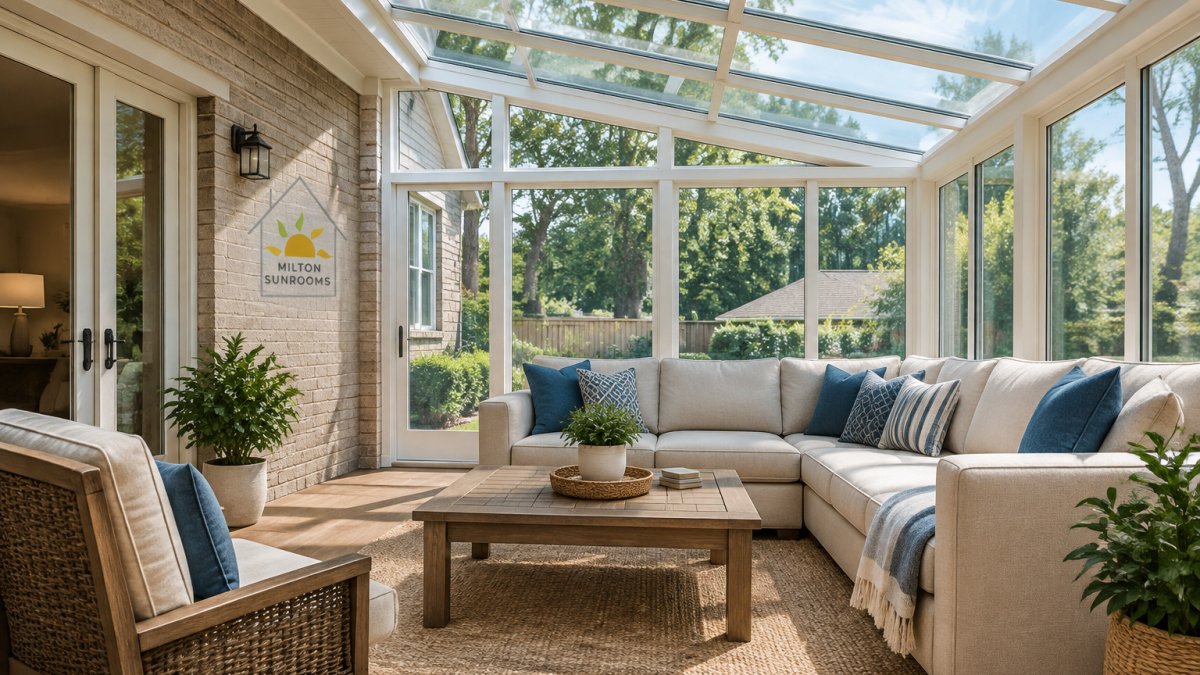
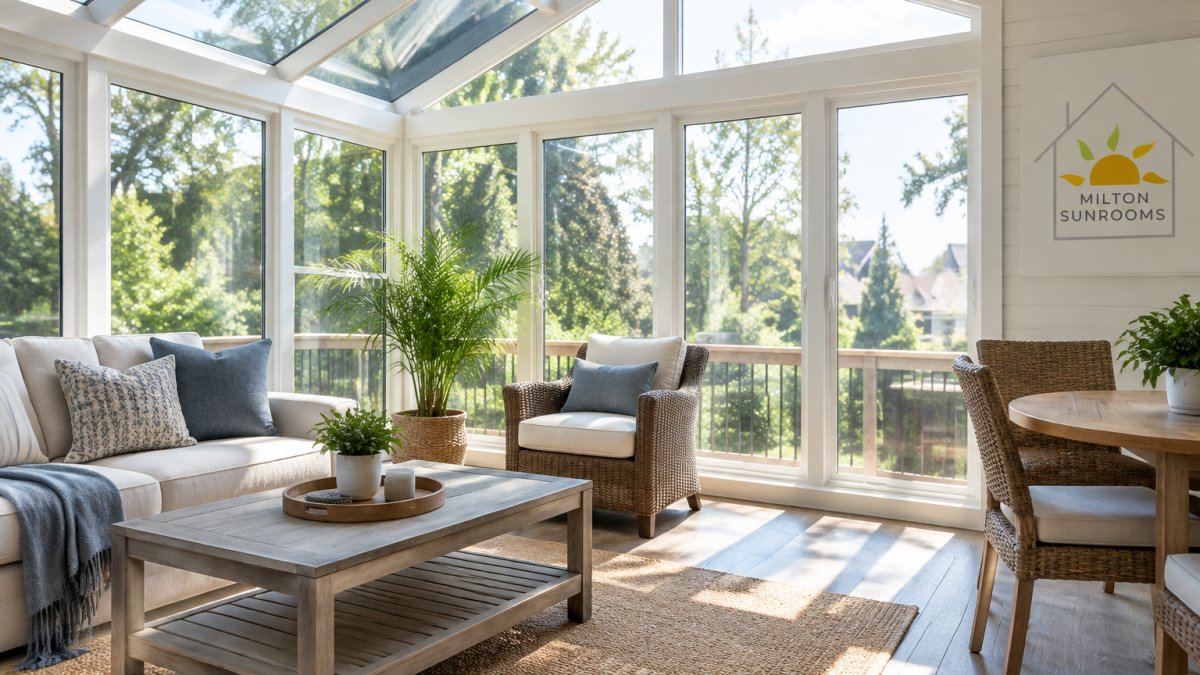
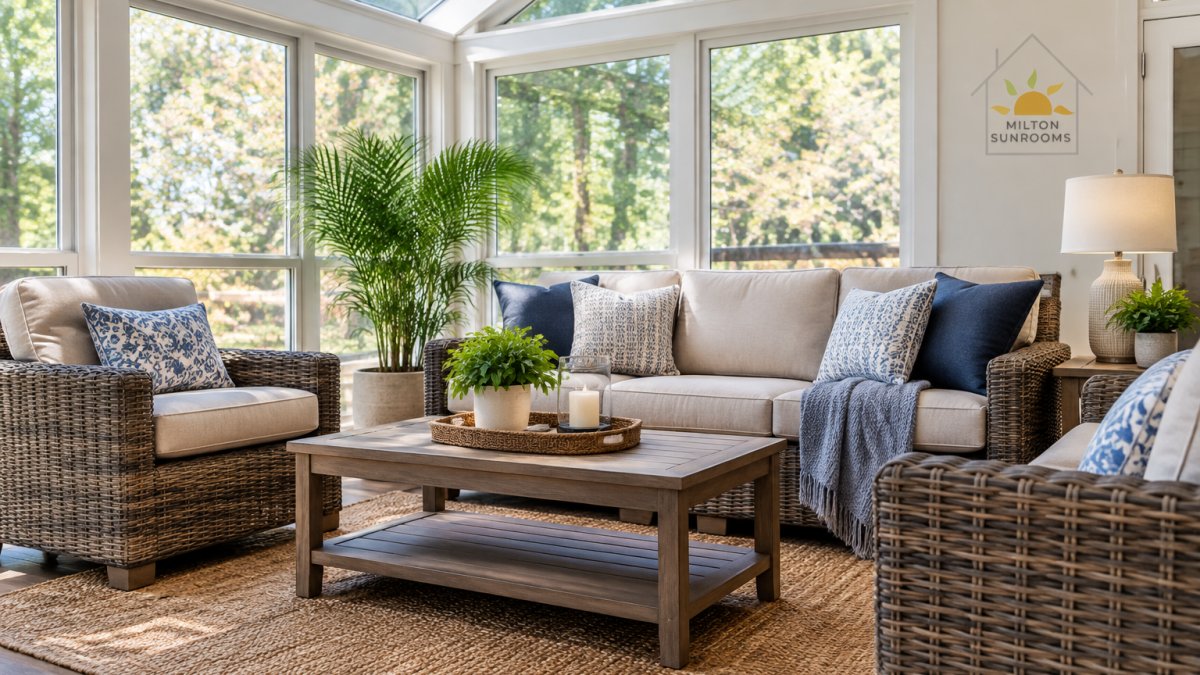
Start with the frame. Wicker and rattan hold up well in a glass enclosure when they're rated for outdoor use. Resin wicker handles humidity better than natural rattan, which can dry and split near constant sun.
Glass choice affects all of it. If glare and heat are already a problem, how to choose energy efficient sunroom glass options explains which glass reduces UV and heat gain.
Small Year Round Sunroom Furniture Ideas for Tight Spaces
Small year round sunroom furniture ideas come down to measurement, not guesswork. Plan walkways first, then fill the leftover space with furniture.
Measure the room and subtract the width of each main path. What's left is your furniture footprint.
Circulation Clearances That Actually Work
Treat these as minimums, not targets:
- Main walkway (door to door, or door to the far window wall): 30 to 36 inches. Below 30 inches, two people cannot pass without turning sideways.
- Secondary path (between seating and a wall or window): 24 inches, enough to reach a window latch or water a plant.
- Sofa or loveseat to coffee table: 18 inches, so you can sit and stand without knee contact.
- Coffee table to facing chair: 14 to 18 inches; chairs need less because you enter from the side.
A common pattern: you measure, subtract the main path, and discover the leftover depth is 30 inches, enough for a chair but not a sofa. That's the moment to choose two chairs over one loveseat.
Furniture Dimensions to Shop By
Know these footprints before you fall for a photo:
- Loveseat: roughly 50 to 60 inches wide, 32 to 38 inches deep.
- Sofa: roughly 72 to 84 inches wide, 34 to 40 inches deep.
- Sectional: 90 to 120 inches along the long wall plus a 60- to 80-inch return; measure the return against your path, because it closes off a room.
- Lounge chair: 28 to 34 inches wide, 30 to 36 inches deep.
Sample Layouts by Room Shape
Narrow room (under 10 feet wide). Run seating along one long wall only. A loveseat or two lounge chairs face the glass, with a slim console or wall shelf behind them instead of a coffee table. Keep the full 30-inch path on the glass side, and don't put a chair in the far corner.
Small square room (roughly 10 by 10 feet). Two chairs angled toward each other with a round side table between them, plus a storage ottoman in the open corner. Round tables leave a walkable curve instead of a sharp corner.
Open-plan sunroom off a living room. Use the back of a sofa or a low console as the divider, and repeat one material from the living room so the transition feels intentional.
Long, thin room (12 by 20 feet or more). Break it into two zones: a seating group at one end and a reading nook or bistro set at the other. A rug under each zone does the dividing without adding furniture.
Multifunctional Pieces That Earn Their Footprint
A storage ottoman can work as a footrest, side table, or blanket box.
Keep the traffic path clear along the glass so you can reach the windows without climbing over a chair.
Plan walkways first, then shop by these footprints and clearances.
| Item | Value | Note |
|---|---|---|
| Main walkway | 30 to 36 inches | Below 30 inches, two people cannot pass |
| Secondary path | 24 inches | Enough to reach a window latch or plant |
| Sofa or loveseat to coffee table | 18 inches | Sit and stand without knee contact |
| Coffee table to facing chair | 14 to 18 inches | Chairs need less because you enter from the side |
| Chair to side table | 4 to 6 inches | Close enough to set down a glass |
| Seating to glass wall | 12 to 18 inches | Keeps curtains and window cranks usable |
| Loveseat | 50 to 60 inches wide, 32 to 38 inches deep | Right call under 150 square feet |
| Sofa | 72 to 84 inches wide, 34 to 40 inches deep | Suits longer, narrower rooms with two chairs |
Modern Year Round Sunroom Furniture Ideas With Clean Lines
Modern year round sunroom furniture ideas lean on low profiles and open frames.
Pick pieces with visible legs and thin arms. A low-back sofa keeps sightlines to the windows open.
For more direction on matching furniture to a clean-lined room, sunroom design ideas for modern homes covers broader layout and finish choices.
A useful rule: choose one statement piece and keep the rest quiet. A single woven lounge chair can carry a whole room.
Indoor Sunroom Furniture That Blends With Your Home
Indoor sunroom furniture works best when it doesn't fight the house. If your sunroom opens off a living room, carry one or two materials through from inside.
Then let the sunroom differ in one way, lighter fabrics, or woven frames instead of upholstered, so it feels like a retreat, not an overflow room.
A sunroom is a home extension that should read as part of the house, not a separate building. Blending materials is how you get there without matching everything exactly.
Sunroom Ideas on a Budget: Where to Spend and Where to Save
Sunroom ideas on a budget work when you spend on the pieces that take the most abuse. Put money into frames and fabrics.
Spend here:
- Seating frames. These take daily weight and sun.
- Cushions and fabric. Cheap fabric fails first.
- Window treatments. Shade protects everything else in the room.
Save here:
- Coffee and side tables. A simple table does the job.
- Decorative accents. Pillows and throws are easy to swap later.
- Indoor plants. Many cost little and add the most life per dollar.
Buy the seating first and live in the room for a month. You'll learn where the light lands and where you actually sit.
Pricing for custom enclosures depends on size, glass, and site conditions, so we quote each project individually.
Seating, Layouts, and Natural Light: Putting the Room Together
Seating should follow the light. Watch the room for a day before you place anything. Note where the sun is harsh at 3 p.m. and where it's soft in the morning.
Sofas, Sectionals, and Loveseats
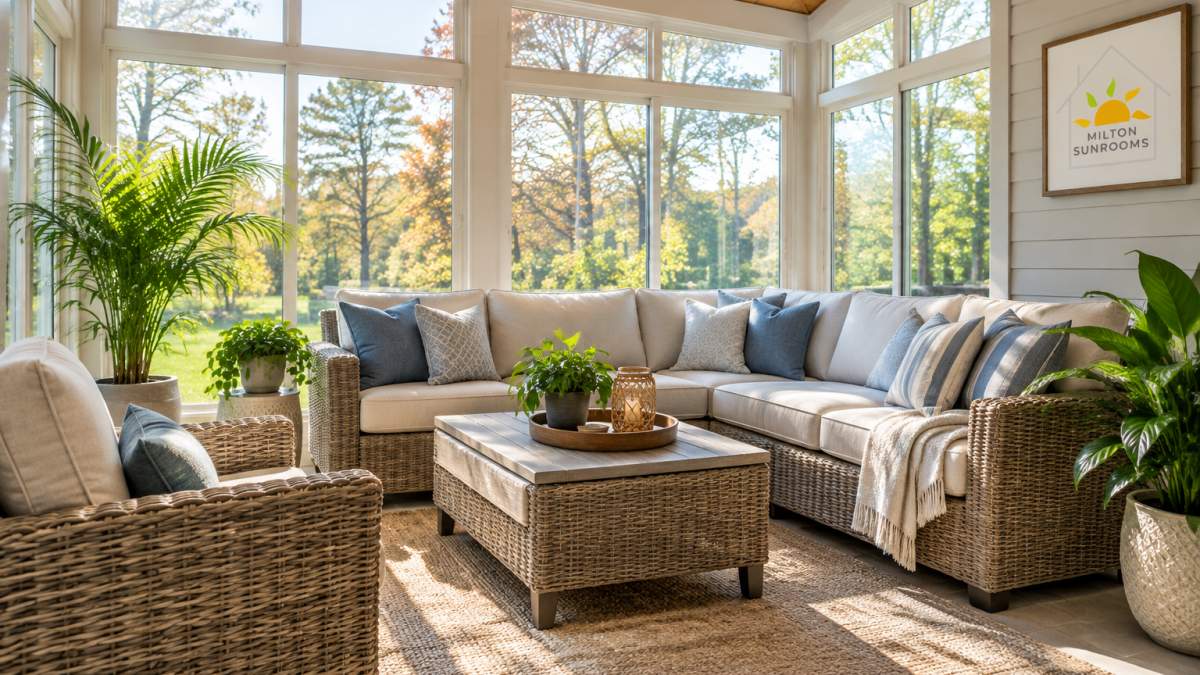
A sectional suits a wide room with one clear corner. A sofa plus two chairs suits a longer, narrower room. A loveseat is the right call under 150 square feet.
Keep at least 18 inches between the sofa and the coffee table. Any tighter and the room feels cramped.
Lounge Chairs, Chaise Lounges, and Reading Nooks
A lounge chair and a small side table make a reading nook. Put it where morning light is soft and glare is low. A chaise lounge works along a long window wall, but check the footprint first.
Seasonal Comfort, Care, and Durability
Most sunroom guides stop at styling. The piece that survives year-round use is the one chosen and maintained for the room's worst week, not its best afternoon.
How Materials React to a Glass Room
Glass and glare. Glass choice affects everything above it. If glare and heat are already a problem, how to choose energy efficient sunroom glass options explains which glass reduces UV and heat gain before you buy a single chair.
Adapting the Room for Hot Summers and Cold Winters
The goal is to change textiles, shade, and accessories with the season, not the furniture.
Summer. Swap in light-colored, breathable cushion covers and remove heavy throws.
Winter. Add washable throws, a thicker rug, and a small space heater rated for the room's size.
Spring and fall. Ventilate on mild days, check seams and frames for mildew or chalking, and refresh any wood finish before winter.
A Maintenance Routine That Protects the Investment
- Monthly: wipe frames with a damp cloth; vacuum cushions before debris works into the seams.
- Seasonally: rotate cushions and chairs twice a year. Sun hits one side of a room harder, and rotation evens out the fade.
- Before winter: bring thin cushions inside, touch up powder-coat chips, and check that drainage paths on cushion foam are clear.
- Annually: refresh wood finishes and inspect fabric seams for thinning or mildew.
Temperature control affects how much you use the room. For the practical side, year-round sunroom temperature control tips covers shading, ventilation, and seasonal adjustments.
Watch out: leaving cushions out through a wet fall is the fastest way to ruin good fabric, mildew sets into foam and seams long before the surface looks damaged.
Planning Your Sunroom Furniture With Milton Sunrooms
Furniture choices get easier once the enclosure is right. That's the part we handle.
Milton Sunrooms has served homeowners across Metro Atlanta and the surrounding counties since 2008.
If you're ready to plan the space around year-round use, explore our four season sunroom construction and see how the enclosure supports the furniture you want.
Have questions about your project? contact our team to schedule a free consultation and quote.
Frequently Asked Questions
What is the best furniture to put in a sunroom?
Choose weather-resistant frames and fade-resistant cushions suited to a glass enclosure. Deep-seated seating like a loveseat or sectional anchors the room, while a lounge chair or chaise lounge adds a reading nook. Add a side table and coffee table in weather-resistant materials, then layer soft furnishings and indoor plants for warmth. Choose pieces sized to your floor plan so the layout stays functional.
Can I put regular furniture in a sunroom?
You can, but standard indoor furniture may wear faster under direct sunlight and temperature swings. A four-season room with climate control is gentler on standard upholstery, yet UV exposure through the glass enclosure still breaks down fabrics over time. If you want to use pieces you already own, keep them out of direct sun and rotate them seasonally. For furniture you plan to keep for years, choose durable, weather-resistant materials rated for indoor-outdoor style.
How do you arrange furniture in a small sunroom?
Measure the room first and leave clear space for walkways. Place the largest piece, usually a loveseat or small sectional, against the longest solid wall rather than in front of windows. Use multifunctional and small-space furniture such as nesting side tables, a bench with storage, or a swivel lounge chair that turns toward the view. Keep the center open and pull seating into a conversation circle. Vertical elements like tall plants and wall shelves add function without eating floor space.
Can a sunroom be used all year round?
A four-season sunroom built with insulation, energy-efficient glass, and heating and cooling can be used year-round, even in cold winters and hot summers. Three-season rooms may get too hot or cold at the extremes. Furniture choice matters too, so select pieces suited to the room's conditions. If year-round living is the goal, confirm the room's climate control before buying furniture so the pieces match the conditions.
Your sunroom should be usable in January, not just June. The right enclosure makes that possible, and the right furniture makes it comfortable. Milton Sunrooms brings custom design, quality materials, and a 100% customer satisfaction guarantee to every build. Get started with Milton Sunrooms and create a year-round retreat your family actually uses.