 listicle
Custom Patio Enclosures for Georgia Homes: 7 Options
Table of Contents
- Custom Patio Enclosures for Georgia Homes: 7 Options That Work
- Screen Room vs Sunroom: Which Enclosure Type Fits Your Home?
- Patio Enclosure Design Ideas for North Fulton Properties
- What Drives Patio Enclosure Cost in Georgia
- Questions to Ask a Sunroom Contractor Before You Sign
- Why Milton Sunrooms Builds Enclosures That Last
- Conclusion: Choosing Your Custom Patio Enclosure
- Frequently Asked Questions
Last Updated: October 12, 2026
Custom Patio Enclosures for Georgia Homes: 7 Options That Work
Custom patio enclosures for Georgia homes turn an underused deck or porch into a room you can enjoy in every season, and they hold up against everything from July humidity to January cold snaps. At Milton Sunrooms, we have designed and built these spaces across north Fulton County since 2008, and we have seen how much the right choice depends on your home, your budget, and how you plan to use the space. Below, we break down seven enclosure options that work in this climate, along with the design ideas, cost factors, and contractor questions that matter most.
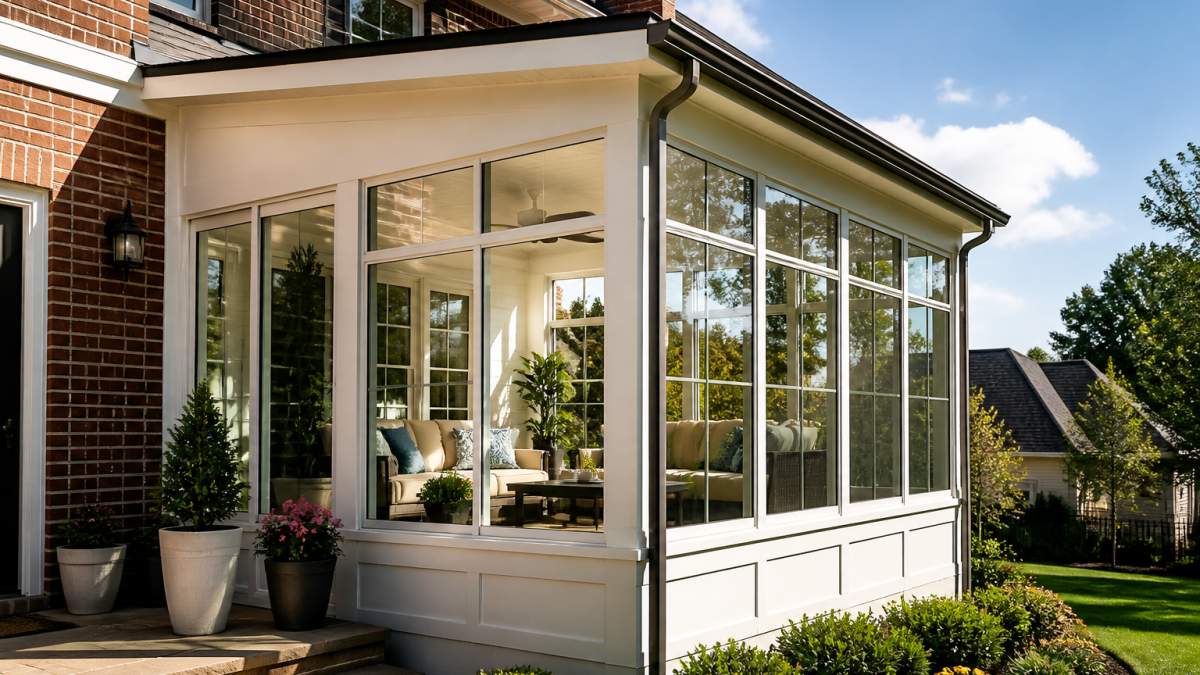
For most homeowners who want year-round comfort, a four-season sunroom is often a good choice because it includes insulation and climate control. If you mainly want relief from bugs and light rain, a screen room can be a more cost-effective option.
Screen Room vs Sunroom: Which Enclosure Type Fits Your Home?
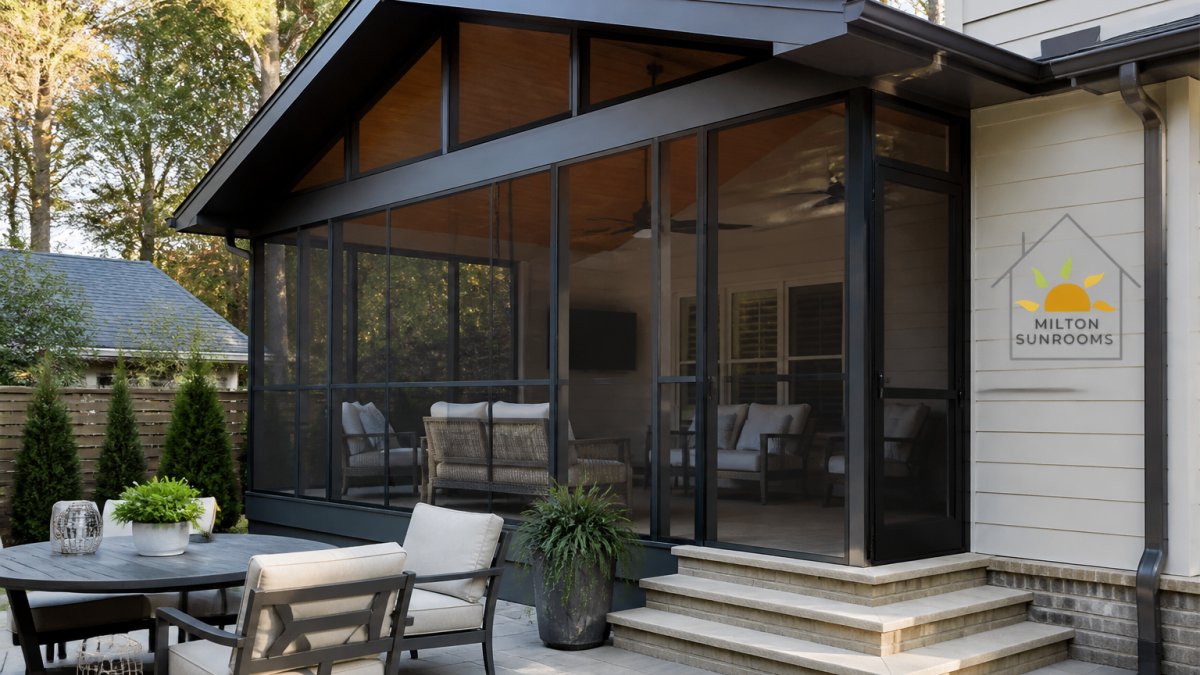
The difference between a screen room and a sunroom often comes down to climate control: a screen room is typically a screened, roofed space that blocks bugs and light rain but follows outdoor temperatures, while a sunroom is generally insulated and glazed so it can be heated and cooled like the rest of your house. This is a significant decision in any patio enclosure project, and it can influence both cost and how many months a year you use the room.
A screen room can be suitable for homeowners who want fresh air and a bug-free place to sit from spring through fall. A sunroom can be a good option for those who want to use the space on a cooler morning or a warmer afternoon.
Patio Enclosure Design Ideas for North Fulton Properties
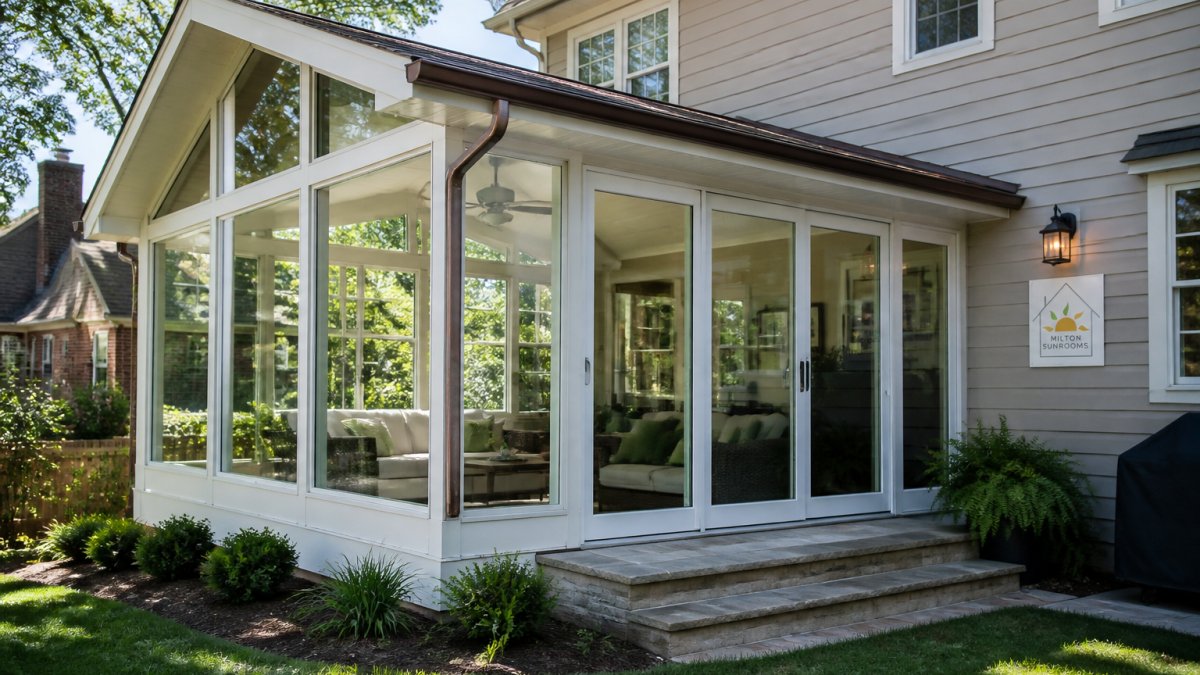
Design ideas for north Fulton properties tend to follow the architecture of the home. Estate and golf course properties in Milton and Johns Creek often call for gable roofs, matching brick or stone knee walls, and large glass panels that frame the backyard view. Smaller lots in established neighborhoods usually work better with a simple shed roof that keeps the enclosure from crowding the yard.
What Drives Patio Enclosure Cost in Georgia
Patio enclosure cost in Georgia depends on four main factors: size, materials, roof type, and whether the space needs heating and cooling. A larger footprint uses more framing, glass, and roofing. Insulated glass and climate control add to the total. A gable roof can involve more framing and finish work compared to a shed roof.
Permits and HOA approvals can also affect your timeline and budget. Many north Fulton neighborhoods have architectural review requirements, and it is worth confirming those before you finalize a design.
Because every project is different, we quote each enclosure individually. For current pricing on your specific space, get a free quote from Milton Sunrooms.
| Decision Point | Choose This | If You... |
|---|---|---|
| Screen room | Screens with a solid roof | Want fresh air and bug-free evenings, spring through fall |
| Four-season sunroom | Insulation, glass, HVAC | Want to use the room every month of the year |
| Gable roof | Higher pitch, more framing | Want the enclosure to match a traditional roofline |
| Shed roof | Single slope, simpler build | Have a smaller lot or a tighter budget |
| Knee wall | Half wall plus glass | Need furniture placement and extra insulation |
Questions to Ask a Sunroom Contractor Before You Sign
Questions to ask a sunroom contractor should cover licensing, insurance, permits, materials, warranties, and who actually performs the work. Ask them before you sign anything, not after. The answers tell you more about a builder than any showroom ever will.
Our recommended list:
- Are you licensed and insured, and can I see proof?
- Who pulls the permit, and is it included in the quote?
- What materials do you use for framing, glass, and roofing?
- How do you handle drainage and flashing where the enclosure meets the house?
- What does your workmanship warranty cover, and for how long?
- Will you provide references from similar projects nearby?
- Who is my point of contact once construction starts?
That last question matters more than most homeowners expect. We understand concerns about contractors disappearing mid-project, which is a common issue we hear about from those who have had negative experiences with other builders.
Why Milton Sunrooms Builds Enclosures That Last
Milton Sunrooms builds enclosures that last because we start with quality materials and build to your exact specifications, rather than forcing your home into a preset design. We have served homeowners across Metro Atlanta and the surrounding counties, including Fulton, Cobb, Gwinnett, Forsyth, Cherokee, Bartow, and DeKalb, since 2008.
What sets our work apart:
- We repurpose what you already have. If your deck or porch is structurally sound, we can often enclose it instead of tearing it down and starting over.
- We design around your home. Every enclosure is custom-designed to fit your roofline, lot, and how you want to use the space.
- We stand behind the work. Our 100% customer satisfaction guarantee means we are still here after the final walkthrough.
If you have been burned by a contractor before, that guarantee is the part worth asking about. We are happy to explain exactly what it covers.
Conclusion: Choosing Your Custom Patio Enclosure
The right enclosure comes down to how you want to live in the space: a screen room for seasonal evenings, a four-season sunroom for year-round comfort, or something in between. Whichever you choose, the details, from roof pitch to drainage to who holds the permit, decide whether the room feels like part of your home or an addition you tolerate.
At Milton Sunrooms, we have spent years helping north Fulton homeowners turn existing decks and porches into comfortable, bug-free living spaces that add real value. Our team handles the custom design, uses quality materials built to last, and backs every project with our 100% customer satisfaction guarantee.
Get a free quote from Milton Sunrooms and find out what your patio enclosure could look like.
Frequently Asked Questions
What types of patio enclosures can homeowners choose from?
Homeowners can explore various types of patio enclosures, such as screened porches and glass-panel sunrooms. Each type offers different levels of weather protection, temperature control, and maintenance requirements. Screened rooms typically provide airflow and bug protection, while glass enclosures often allow for year-round use with climate control. The right choice depends on how you plan to use the space and your budget.
How much does a custom patio enclosure cost?
Patio enclosure cost depends on size, materials, roof style, foundation work, and whether the project involves repurposing an existing deck or building new. Factors like glass versus screen panels, insulation, and electrical work for lighting or HVAC also affect the total. Because every project is custom, pricing varies significantly. Request a free quote from a qualified contractor to get an accurate estimate for your specific enclosure.
Do I need a permit to build a patio enclosure?
Permit requirements vary by county and municipality. Most jurisdictions require a building permit for enclosed structures, especially those with electrical, HVAC, or structural additions. Homeowners associations may also have design and approval rules. Before starting any project, confirm local requirements with your contractor, who should handle permitting as part of the build process.
Can an existing deck be converted into an enclosed patio?
Many existing decks can be converted into enclosed patios, provided the deck structure is sound and meets current building codes. A contractor will assess the foundation, framing, and load capacity before recommending conversion versus a rebuild. Repurposing an existing deck often saves on site preparation and foundation costs, making it a practical option for many homeowners looking to add usable living space.
What is the difference between a screened porch and a sunroom?
A screened porch uses mesh panels to keep bugs out while allowing airflow and natural ventilation. A sunroom uses glass windows and insulated walls, often with heating and cooling, to create a year-round living space. Screened porches cost less and feel more like outdoor space, while sunrooms function as interior rooms with climate control. Your choice depends on how you want to use the space across seasons.