 comparison
Screened Porch vs Four Season Room Cost: 2026 Guide
Table of Contents
- Screened Porch vs Four Season Room: The Cost Decision at a Glance
- Sunroom vs Screened Porch: What You Get for the Money
- Screened Porch to Sunroom Conversion Cost: What Changes When You Upgrade
- Four-Season Room Cost Per Square Foot: Where the Budget Goes
- Three-Season Room vs Four-Season Room: Which Fits Your Climate and Budget
- Lifetime Ownership Costs: Energy Bills, Maintenance, and Resale Value
- Permits, Building Codes, and Property Tax Implications
- Conclusion: Choosing the Right Addition for Your Home
- Frequently Asked Questions
Last Updated: October 14, 2026
Screened Porch vs Four Season Room: The Cost Decision at a Glance
The screened porch vs four season room cost gap comes down to one thing: how much of the year you want to use the space.
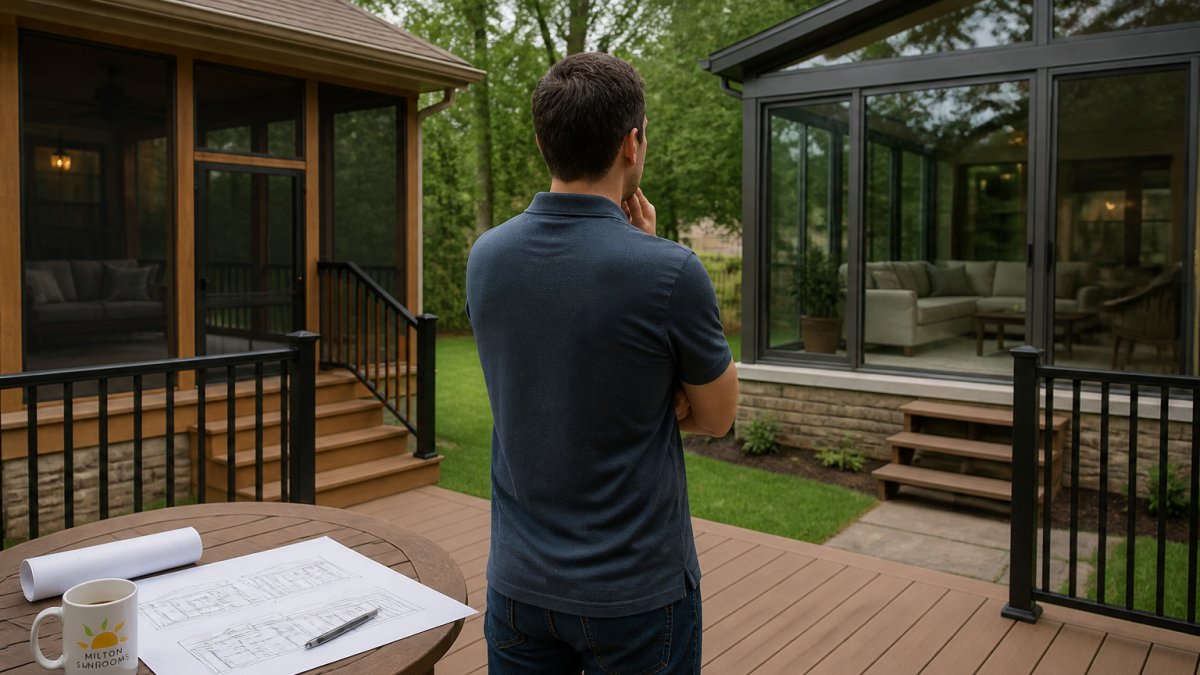
How These Two Additions Differ in Function
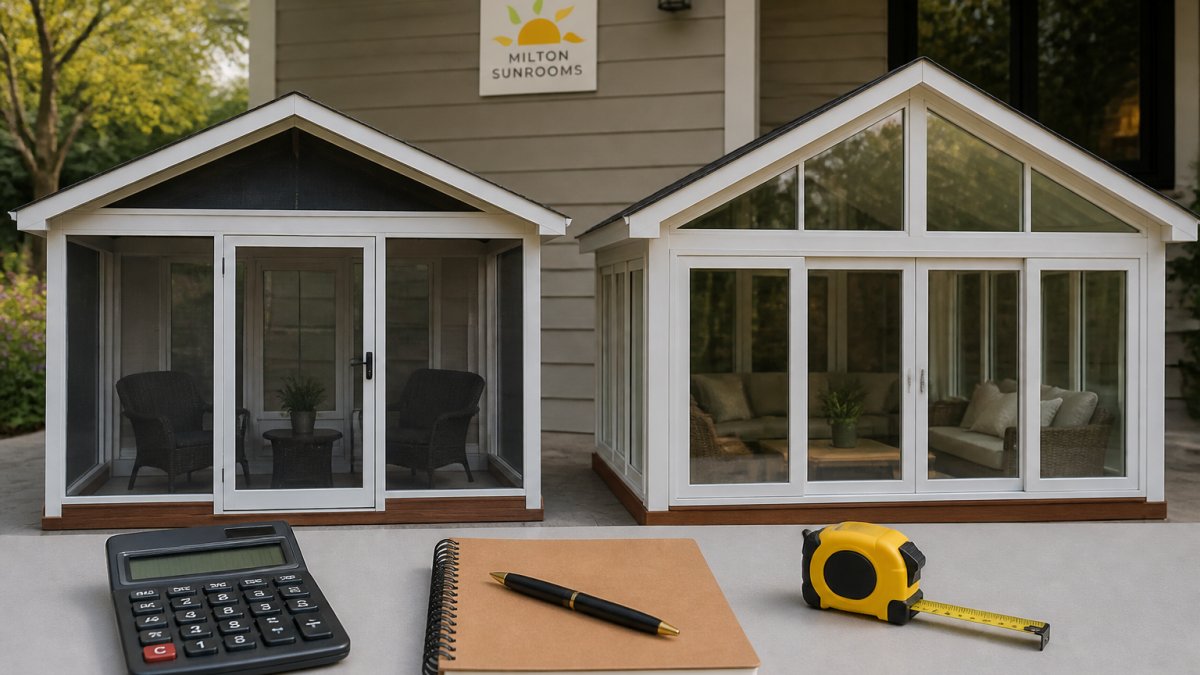
A screened porch is an outdoor space with screens instead of solid walls. It keeps bugs out and lets breezes through, but it follows the weather. A four-season room is an insulated, heated and cooled addition with glass windows and real walls, usable in January and July alike.
What the Price Gap Actually Reflects
The gap reflects materials and systems, not just labor. Screened porches need framing, screening, and a roof. Four-season rooms add insulation, glazing, HVAC, and finished interiors on top of that. More materials, more trades, more cost.
| Feature | Screened Porch | Four-Season Room |
|---|---|---|
| Walls | Screens | Insulated walls, glass windows |
| Climate control | None | Heating and cooling |
| Year-round use | No | Yes |
| Typical cost tier | Lower | Higher |
| Permit complexity | Usually simpler | Often more involved |
Sunroom vs Screened Porch: What You Get for the Money
A sunroom and a screened porch serve different jobs, and the price difference tracks the comfort difference. A screened porch gives you shade, airflow, and bug protection for part of the year. A sunroom gives you a finished, temperature-controlled room you can furnish and use daily. If your goal is simply to sit outside on mild evenings, a screened porch does that job well.
Screened Porch to Sunroom Conversion Cost: What Changes When You Upgrade
The screened porch to sunroom conversion cost depends on what you keep and what you replace. If you already have a screened porch, you are not starting from zero. The frame and roof may be reusable, which trims the project. What changes is the enclosure: screens come out, insulated walls and glass windows go in. As a reference point, Patio Warehouse's guide to converting a screened porch to a sunroom notes that conversion costs depend heavily on the choices you make along the way.
Four-Season Room Cost Per Square Foot: Where the Budget Goes
Four-season room cost per square foot runs higher than a screened porch because every square foot carries more systems. The enclosure is only part of it. You are paying for insulation, glazing, wiring, and HVAC, and each of those scales with the size of the room.
To make the comparison honest, hold the footprint constant. A 200-square-foot project is the cleanest like-for-like unit, because that is roughly the size where both a screened porch and a four-season room make sense as a real addition rather than a bump-out.
Side-by-Side Cost Per Square Foot
| Line item | Screened porch (per sq ft) | Four-season room (per sq ft) |
|---|---|---|
| Foundation and footings | $12-$20 | $20-$35 |
| Framing and roof | $25-$40 | $30-$50 |
| Enclosure (screens vs. glazing) | $8-$15 | $35-$70 |
| Insulation and air sealing | $0-$3 | $6-$14 |
| Electrical and lighting | $4-$8 | $10-$20 |
| HVAC extension | $0 | $15-$30 |
| Interior finishes | $0-$5 | $20-$40 |
| Labor (blended) | $20-$35 | $35-$60 |
| All-in range | $70-$125 | $170-$320 |
Those ranges are broad on purpose. A screened porch with a simple gable roof and pressure-treated frame sits near the bottom; a four-season room with a vaulted ceiling, custom windows, and a dedicated mini-split sits near the top.
Why the Four-Season Number Moves So Much
- Foundation: A four-season room often needs a deeper, insulated foundation than a screened porch, and if the existing porch footing was sized for a seasonal load, it may need to be augmented.
- Framing: Heavier framing carries insulation and glass. A 2x4 wall at 16 inches on center is common for a screened porch; a four-season room typically wants 2x6 walls to hit modern insulation targets.
- Glazing: Windows and glass panels are a major line item; the more glass, the higher the cost. Double-pane low-E units are the baseline, and triple-pane or large fixed panels push the number up fast.
- HVAC: Extending heating and cooling to the room adds equipment and ductwork. A ductless mini-split is often the least invasive option when the main system has no spare capacity.
- Permits and inspections: A four-season room triggers more inspection stops, framing, insulation, electrical, and final, and each one adds scheduling time and sometimes rework.
A Worked 200-Square-Foot Example
Take a 200-square-foot project on an existing deck with a sound roof structure:
- Screened porch: roughly $14,000-$25,000 all-in, with the enclosure and screening as the largest single line.
- Four-season room: roughly $34,000-$64,000 all-in, with glazing, insulation, and HVAC together accounting for more than half the total.
The gap is not labor. It is the systems that make the room livable in February and August.
Itemized Cost Drivers: Foundation, Framing, Glazing, HVAC
- Foundation: A four-season room often needs a deeper, insulated foundation than a screened porch.
- Framing: Heavier framing carries insulation and glass.
- Glazing: Windows and glass panels are a major line item; the more glass, the higher the cost.
- HVAC: Extending heating and cooling to the room adds equipment and ductwork.
Three-Season Room vs Four-Season Room: Which Fits Your Climate and Budget
The three-season room vs four-season room choice is really a climate question. A three-season room sits between the two: enclosed and screened or lightly glazed, comfortable in spring, summer, and fall, but not built for deep winter or peak summer heat. A four-season room handles all of it. In our region, where summers run hot and humid and winters bring real cold snaps, a three-season room means closing it up for part of the year.
Lifetime Ownership Costs: Energy Bills, Maintenance, and Resale Value
Upfront cost is only half the story. A four-season room adds ongoing energy costs because you are heating and cooling it, while a screened porch adds almost none. Maintenance differs too: screens tear and need replacing, insulated walls and windows need less frequent attention.
Most cost comparisons stop at the build. The more useful question is what each option costs to own over 10 to 15 years, because that is where the two structures separate in ways the sticker price hides.
Annual Energy Cost
A screened porch has no HVAC load of its own, so its energy cost is effectively zero beyond any lighting. A four-season room is conditioned space, and the load depends on three things: square footage, glazing area, and how well the envelope is sealed.
- A well-built 200-square-foot four-season room with double-pane low-E glass, 2x6 walls, and a ductless mini-split will add to a household's utility bill across a full year, with summer cooling and winter heating as the two peaks.
- The same room with a lot of west-facing glass, single-stage equipment, and a leaky envelope can run noticeably higher.
- A three-season room sits in between: near-zero in shoulder seasons, but you may run a space heater or portable AC during the extremes.
Maintenance Over Time
- Screened porch: Screening is the recurring cost. Standard insect screen is inexpensive but punctures and sags; pet-resistant or solar screen lasts longer at a higher price. Expect to re-screen sections periodically, and to wash or replace screens more often in wooded or windy lots. Wood framing needs periodic sealing or painting.
- Four-season room: Insulated walls and sealed glazing need less frequent attention, but window seals, weatherstripping, and HVAC filters are ongoing items. A mini-split needs an annual or biennial service. Roof and flashing maintenance is similar for both.
- Shared items: Roofing, gutters, and any exterior trim age at roughly the same rate on both structures, so do not credit the four-season room with avoiding those costs.
Resale and Payback
A finished, year-round room tends to appeal to more buyers than a seasonal one because it reads as added living space rather than an outdoor feature.
A practical way to think about payback:
- Estimate the four-season premium over a screened porch for your footprint (often roughly double, per the section above).
- Estimate the annual energy and maintenance delta between the two.
- Ask a local real estate professional what a permitted, conditioned room of that size typically contributes to resale in your area.
In many markets, the resale contribution recovers a meaningful share of the four-season premium, but rarely all of it, the rest is the value you get from using the room every month. A screened porch, by contrast, is usually treated as a feature rather than added living area, so its resale contribution tends to be smaller and more variable.
The Ownership Math in One Line
If you will use the space most months, the four-season room's higher build cost is partly offset by resale contribution and by the fact that you are not paying twice, once for the porch and again later for a conversion. If your use is genuinely seasonal, the screened porch wins on total cost of ownership by a wide margin.
Permits, Building Codes, and Property Tax Implications
Permits and codes are where the two projects diverge most. A screened porch is often treated as an outdoor structure with a simpler approval path. A four-season room is finished living space, so it typically faces stricter code review for insulation, electrical, and HVAC. Because it can count as added square footage, it may also change your property tax assessment. For code and energy guidance, the U.S. Department of Energy's building energy resources is a useful starting point.
Conclusion: Choosing the Right Addition for Your Home
The right choice depends on how you want to live in the space. If seasonal evenings outside are enough, a screened porch delivers that for less. If you want a room that works in every season and adds lasting value, a four-season room is the better investment. Milton Sunrooms has designed and built both across the area since 2008, and we can repurpose your existing porch or deck rather than starting over. We build to your exact specifications with quality materials, backed by our 100% customer satisfaction guarantee.
Frequently Asked Questions
Is it better to have a screened porch or a sunroom?
A screened porch costs less upfront and works well for mild weather, but a four-season sunroom delivers year-round comfort with insulation, HVAC, and glass panels. For homeowners in north Fulton County who want to use the space in winter and summer, a sunroom is the stronger long-term investment. For seasonal use only, a screened porch is a practical, lower-cost option.
How much does it cost to convert a screened porch to a four-season room?
Conversion costs vary widely based on foundation, framing, insulation, glazing, and HVAC needs. Because every existing porch is different, Milton Sunrooms recommends a free on-site assessment to get an accurate project budget.
What is the difference between a three-season room and a four-season room?
A three-season room is enclosed with screens or single-pane windows and is usable in spring, summer, and fall. A four-season room has full insulation, energy-efficient glazing, and HVAC connections, making it comfortable year-round. The cost difference reflects the added insulation, heating, cooling, and structural work required for four-season use.
Does a four-season room add more value than a screened porch?
A four-season room typically adds more resale value because it increases conditioned living space, which appraisers count differently than a screened porch. A screened porch adds curb appeal and outdoor enjoyment but is often valued as a porch, not as interior square footage. The higher upfront cost of a four-season room is often recovered through increased home value.
What factors affect the cost of a four-season room?
Key cost factors include foundation type, framing and structural requirements, window and glazing choices, insulation level, HVAC extension, roofing, and local building permits. Custom design elements and material upgrades also raise the budget. Milton Sunrooms provides itemized quotes so homeowners can see exactly where their investment goes before construction begins.