 How-to
5 Steps to Get Your Sunroom Counted in Appraisal
Quick Summary
A sunroom usually counts toward square footage in a sunroom appraisal only if it is finished, permanently heated and cooled, above grade, attached to the main house, and reached through the living area. Rooms that fail these tests are typically reported separately and valued as amenities.
- Appraisers usually report gross living area, the finished, above-grade space that is heated and cooled.
- A three-season room with only a portable space heater usually falls outside GLA.
- Permanent heating and cooling, finished walls and flooring, and direct interior access are the key tests.
- Permits and final inspection sign-off on file help a sunroom qualify and avoid lender flags.
- Tax records and prior listings do not prove GLA, so ask your appraiser which measurement is used.
Table of Contents
- Do Sunrooms Count Toward Square Footage in an Appraisal?
- Step 1: Understand Gross Living Area Versus Total Floor Area
- Step 2: Check Whether Your Sunroom Meets GLA Requirements
- Step 3: Prepare Documentation for Your Appraiser
- Does a 3 Season Room Count as Square Footage?
- Does a 4 Season Room Count as Square Footage and Add Value?
- Does a Sunroom Add Value to a Home When You Sell?
- Booking a Sunroom Consultation Before Your Next Appraisal
- Frequently Asked Questions
Do Sunrooms Count Toward Square Footage in an Appraisal?
Last Updated: November 4, 2026
Usually, a sunroom counts toward square footage in a sunroom appraisal only if it meets strict conditions. This question comes up often from homeowners preparing to sell or refinance. The short answer is that appraisers focus on whether the room is finished, heated, and connected to the main house in a way that matters for living space.
Many homeowners assume every enclosed room adds to the home's size, but a sunroom appraisal follows stricter measurement rules than that. A sunroom can add real value to a home, but it may be reported as a separate line item rather than included in the main living area. The details of your room decide which box it lands in.
Here's the key distinction: the home's appraised square footage is a specific measurement, not a general sense of how big the house feels.
Step 1: Understand Gross Living Area Versus Total Floor Area
Appraisers typically report gross living area (GLA), which is the finished, above-grade living space that is heated and cooled and accessible from the main house. Total or gross floor area is a broader measure that can include garages, basements, porches, and other spaces that do not meet GLA rules.
Knowing this difference matters. A sunroom might count toward total floor area on a listing or tax record while still falling outside the GLA figure used in the appraisal. Homeowners should ask their appraiser which measurement is being used before assuming the room will add to the headline number.
- GLA: Finished, above-grade, heated and cooled, reached through the main house
- Total or gross floor area: Broader measure, may include porches, garages, and basements
- Separately reported area: Common for sunrooms that fail one or more GLA conditions
Step 2: Check Whether Your Sunroom Meets GLA Requirements
Your room has to pass several tests before it qualifies for GLA. Work through each one before you call the appraiser, and use the borderline examples below to see how the tests apply in practice.
Heating, Cooling and Finished Space
A sunroom that is only a screened porch with a roof will not usually count as GLA. Appraisers look for permanent heating and cooling, along with finished flooring, insulation, and walls that resemble the rest of the home. A three-season room, which is not fully climate-controlled, often falls outside GLA for this reason. For a side-by-side look at screened porch and four-season room costs, the cost breakdown is a useful place to compare.
A four-season room, built with insulated walls and a heating and cooling system, has a much better chance of counting. You can see what a fully climate-controlled four-season sunroom build looks like from this business. Still, the appraiser will check that the system is permanent and works, not just a portable heater in the corner.
Above-Grade Versus Below-Grade Space
Above-grade means the room sits at or above ground level. Below-grade means it sits underground, like a finished basement. GLA generally covers above-grade space only. A sunroom built on a raised foundation above grade is in a stronger position than one built partly underground.
Permanent Construction, Access, and Legal Use
The room also needs to be permanently attached to the house, reachable through the main living area rather than only from outside, and built to the standards your local jurisdiction requires. Permits and final inspection sign-off matter here: an unpermitted room can still be measured, but the appraiser may report it differently or flag it for the lender.
Borderline Scenarios That Decide the Answer
- A three-season room with a space heater. Fails the permanent climate-control test. Expect separate reporting, not GLA.
- A converted porch with permanent HVAC and finished walls. Often qualifies, provided it is above grade, attached, and permitted. The conversion details are what the appraiser will verify.
- A heated addition built without permits. Climate control may be present, but legal use is in question. The appraiser may still measure it while noting the permit gap, and the lender may require documentation.
- A sunroom on a slab at grade with a mini-split system. The equipment is permanent, which helps, but the appraiser will confirm the room is finished and connected to the main house before counting it.
Why the Same Room Gets Different Answers
Appraisal, tax assessment, listing, and insurance measurements do not use the same rules. An appraiser follows GLA conventions for lending purposes. A tax assessor may measure total floor area under state and local assessment rules. A listing agent may include a sunroom in the advertised square footage based on prior records. An insurer may measure differently again for replacement cost. That is why a room can appear in the square footage on one document and be excluded on another, and why online answers often conflict.
Watch out: do not assume a tax record or a prior listing proves GLA. Those figures are not prepared under appraisal standards, and an appraiser will measure independently.
A Quick Qualification Checklist
- Permanent heating and cooling, not portable equipment
- Finished flooring, walls, and ceiling consistent with the home
- Above-grade location
- Permanently attached to the main structure
- Direct interior access from the main living area
- Permits and final inspection on file
- Construction meets local code for habitable space
If every box is checked, the room has a strong case for GLA. If one or two are missing, expect the appraiser to report the room separately and value it as an amenity.
Before you call the appraiser, use this quick guide to see how each condition affects whether your sunroom counts toward GLA.
| Condition | Qualifies for GLA when | Typical outcome if not met |
|---|---|---|
| Heating and cooling | Permanent system, not portable | Reported separately |
| Finished space | Flooring, walls and ceiling match the home | Reported separately |
| Location | Above grade | Excluded from GLA |
| Connection | Attached and reached from main house | Reported separately |
| Permits | Permits and final inspection on file | Flagged for lender |
Step 3: Prepare Documentation for Your Appraiser
Good paperwork makes the appraiser's job easier and protects your value. Gather these items before the visit:
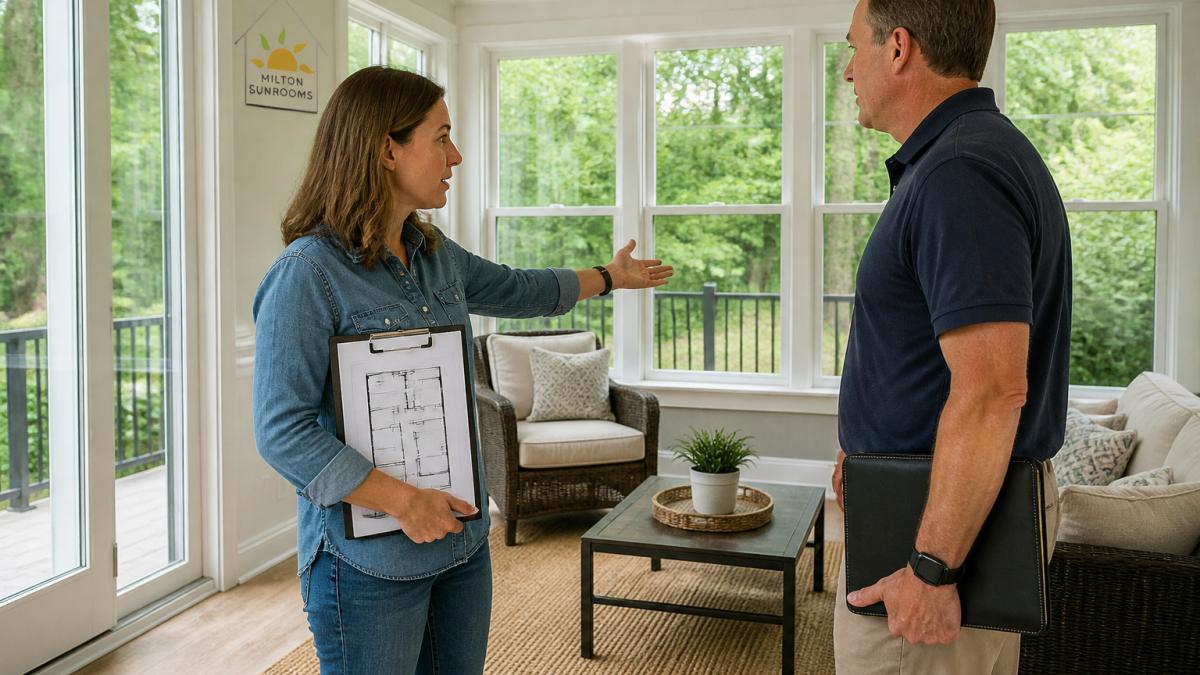
- Original building permits and final inspection sign-off
- Contractor invoices showing materials and HVAC installation
- A simple floor plan with the sunroom's dimensions marked
- Photos of the finished room, including the heating and cooling unit
- Any warranty documents for windows, roofing, and the HVAC system
Keep these documents in one folder so you can hand them over quickly.
Does a 3 Season Room Count as Square Footage?
Usually not. A three-season room is designed for use in mild weather and is not fully heated and cooled year-round. Because it fails the climate-control requirement, most appraisers report it separately or exclude it from GLA.
That does not mean the room has no value. Buyers often pay for a bright, screened space even when it does not count toward the main square footage. Ask your appraiser how the room will be listed, since real estate listings sometimes show it differently.
Does a 4 Season Room Count as Square Footage and Add Value?
A four-season room has a much better chance of counting toward GLA when it is insulated, heated, cooled, and connected to the main living area. Appraisers still check the details, including the quality of the construction and whether the room meets local building standards.
Value depends on the same factors. A well-built four-season room that blends with the home can add meaningful value. A poorly finished one may be discounted, even if it technically qualifies. Build quality matters as much as the square footage.
Does a Sunroom Add Value to a Home When You Sell?
Exclusion from gross living area does not mean zero value. This is the point most homeowners miss, and it is where a sunroom's contribution actually gets decided.
That distinction changes how you should think about return. A sunroom that qualifies for GLA is priced alongside the rest of the house on a per-square-foot basis. A sunroom that does not qualify is priced by what buyers in your market have actually paid for comparable enclosed porches, three-season rooms, and unheated additions.
Local demand and recent comparable sales matter more than any general rule of thumb, and no particular return on a sunroom is guaranteed.
Watch out: a sunroom that was built without permits can trigger a appraisal problem that has nothing to do with square footage. If the appraiser flags the room as unpermitted or questions whether it meets local code, the issue can affect the whole report, not just the sunroom line. Resolve permit status before you list.
Three practical steps improve your position:
- Ask the appraiser in advance how the room will be reported, so you know whether it lands in GLA or on a separate line.
- Pull two or three recent comparable sales in your area that include an enclosed porch or sunroom, and note what those homes sold for relative to similar homes without one.
- Have your agent describe the room accurately in the listing, including heating, insulation, and permit status, so buyer expectations match what the appraiser will see.
Talking with a local real estate agent and an appraiser before you decide how much to invest in upgrades is a sensible step. The room's value is set by your market's comparable sales, not by the square footage label alone.
Booking a Sunroom Consultation Before Your Next Appraisal
If you are planning a sunroom or want to know whether an existing one will count, schedule a consultation before your next appraisal. You can get a free quote for a custom sunroom and talk through the layout, heating and cooling options, and documentation you will need. You can also review the three-season porch options and conservatory designs to compare what suits your home.
Frequently Asked Questions
Do appraisers check square footage on a sunroom?
Yes. Appraisers measure the finished, climate-controlled living area of a home, and a sunroom is checked against that standard. Appraisers verify whether the space is heated, finished, permanently attached and accessible from the main house. A sunroom that meets those conditions can be included in gross living area. Sunrooms that do not meet them are usually reported separately and valued as an added feature rather than as living space.
Does a 4 season room count as square footage?
A four-season room usually counts toward gross living area when it has permanent heating and cooling, is finished with flooring, drywall and insulation, sits on a permanent foundation, and connects to the main house through an interior door or shared wall. Appraisers treat it like any other living space once those conditions are met. Keep permit records and HVAC documentation on hand, because they help the appraiser confirm the room's legal and physical status.
Does a 3 season room count as square footage?
A three-season room generally does not count as gross living area if it lacks permanent heating and cooling or is not fully insulated. Many three-season rooms are screened or enclosed porches with limited climate control. Appraisers may still note the space and factor it into value, but it is typically reported as a separate addition rather than included in the main square footage total.
Does a sunroom add value to a home?
A well-built sunroom can add value, particularly when it is finished, climate-controlled and seamlessly connected to the house. Value depends on local market conditions, the quality of construction and how comparable homes in the area are priced. A sunroom that counts as gross living area can raise the appraised value more directly than one reported as a separate feature. Ask your real estate agent to review recent comparable sales in your neighborhood before estimating the return.