 How-to
Reliable Porch Enclosure Contractors Near Me: How to Hire
Table of Contents
- How to Find Reliable Porch Enclosure Contractors Near Me
- Questions to Ask a Sunroom Contractor Before You Sign
- How to Read Sunroom Contractor Reviews and Ratings
- Licensing, Insurance, Permits, and Code Compliance
- What Drives Sunroom Installation Cost and How to Compare Quotes
- Materials, Glazing, and Climate Suitability
- What a Sunroom Contractor Warranty Should Cover
- Frequently Asked Questions
Last Updated: October 18, 2026
How to Find Reliable Porch Enclosure Contractors Near Me
Finding reliable porch enclosure contractors near me starts with narrowing the field to local firms that publish verifiable reviews, hold the right credentials, and specialize in the exact type of enclosure you want.
At Milton Sunrooms, we have built custom sunrooms, screened porches, and patio enclosures across north Fulton County and the surrounding counties since 2008. That experience shapes the advice below.
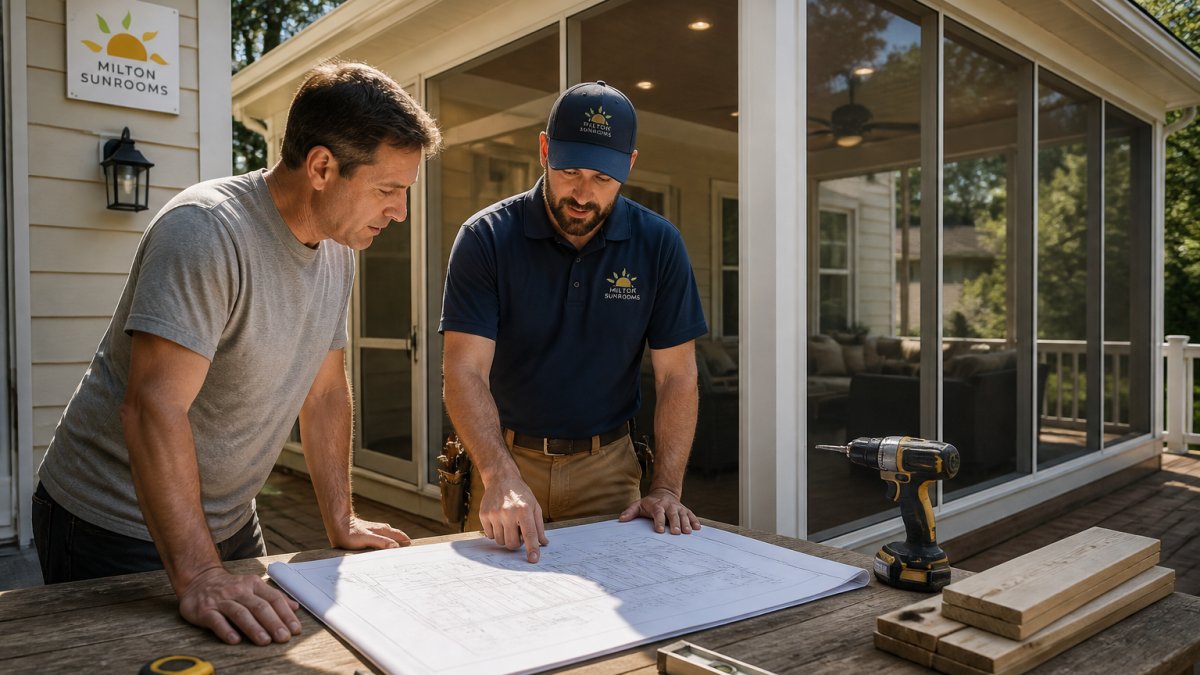
Start With Local Service Areas and Verified Reviews
A local contractor is easier to check, easier to reach, and easier to hold accountable. Start by confirming the company's service area covers your address, then verify its reviews on more than one platform. Many homeowners find that a firm with 40 reviews across two sites is more trustworthy than one with a single glowing testimonial.
- Confirm the contractor lists your town inside its stated service area
- Check Google, the Better Business Bureau, and any trade association listings
- Look for reviews that name the project type and the outcome
- Note how the company responds to criticism, not just praise
Match the Project Type to the Contractor's Specialty
Enclosure work splits into distinct categories, and specialty matters. A screened-in porch, a three-season sunroom, and a four-season room with full climate control are different builds with different requirements.
Ask directly which project types the contractor handles most often. A firm that mostly installs screen panels may subcontract the structural work. A sunroom specialist should be able to explain framing, glazing, and insulation without hesitation.
Questions to Ask a Sunroom Contractor Before You Sign
The right questions separate a professional from a sales pitch. Ask these before any contract is signed:
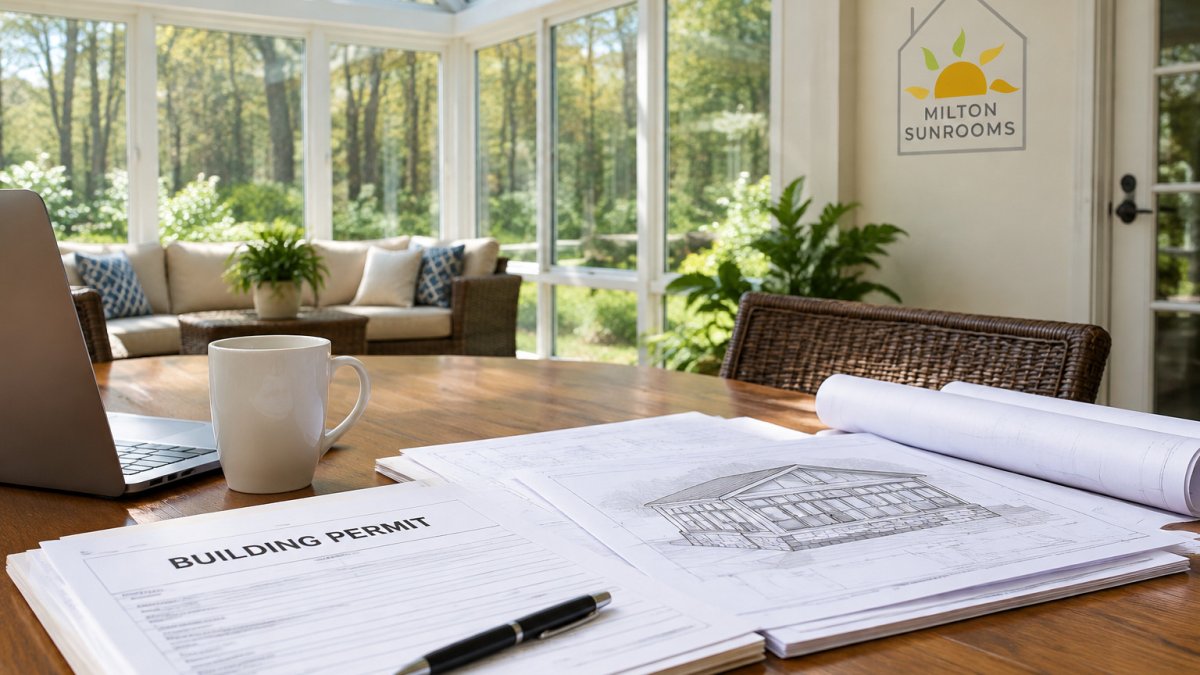
- Who pulls the building permit, and will you show me the approved permit?
- Are you licensed and insured, and can I see certificates with my address listed as certificate holder?
- Who performs the actual installation: your crew or a subcontractor?
- What is the project timeline, and what weather delays should I expect?
- What exactly does your workmanship warranty cover, and for how long?
- Can you work with my existing deck, or will it need structural changes?
- What is the payment schedule, and how much is due at signing?
A reliable contractor answers all seven without flinching. Vague answers on permits, insurance, or warranty are your signal to walk away.
How to Read Sunroom Contractor Reviews and Ratings
Sunroom contractor reviews are only useful when you read them the right way. A wall of five-star ratings with no detail tells you little. Look instead for reviews that describe the project, the timeline, and how problems were handled.
Watch for these patterns:
- Specific praise: "They rebuilt our old deck framing before installing the sunroom" beats "Great job!"
- Balanced criticism: A company that responds professionally to a bad review is usually a safe bet
- Recency: Reviews from the past 18 months reflect the current crew and ownership
- Volume and spread: Consistent ratings across multiple platforms signal real customer satisfaction
One common mistake is judging a contractor on a single review, good or bad. Read the middle of the distribution, where honest customers land.
Licensing, Insurance, Permits, and Code Compliance
Licensing, insurance, and permits are the three credentials that protect you, and each one can be verified in writing before a single board is cut. Requirements vary by state and county, so confirm the specific rules for your address with your local building department, but the verification steps below apply everywhere.
Licensing: what to ask for and how to check it
General contractor licensing is handled at the state and sometimes county or municipal level. Ask the contractor for their license number and the name of the issuing authority, then look it up yourself in that authority's public license lookup. Confirm three things: the license is active, it is held by the company or individual you are hiring (not a subcontractor), and it covers the type of work you need. Some states license residential remodeling broadly; others require a specialty classification for structural or sunroom work.
Insurance: general liability and workers' compensation
Ask for a certificate of insurance showing both general liability and workers' compensation coverage. General liability protects your home if the crew damages it; workers' compensation protects you if a worker is injured on your property. Call the insurer listed on the certificate to confirm the policy is active and the coverage limits are current, certificates can be stale or forged. A common pattern is for homeowners to request to be named as an additional insured on the general liability policy for the duration of the project; ask whether the contractor will do that.
Permits: who pulls them and why it matters
The contractor should pull the building permit in their own name, not ask you to pull it as the homeowner. A permit triggers inspections against the locally adopted building code, which is your independent check that framing, electrical, and structural work meet minimum standards. Ask to see the approved permit before work starts and the inspection sign-offs as the project progresses. Keep copies, they matter at resale and if you ever file a warranty claim.
Code compliance: the checks that apply to enclosures
Porch and sunroom enclosures touch several code areas. Structural framing and deck attachment must meet the locally adopted code, which in most jurisdictions is a version of the International Residential Code. Electrical work, outlets, lighting, ceiling fans, and any heating or cooling, must be permitted and inspected separately in many jurisdictions.
According to the U.S. Federal Trade Commission's consumer advice on home improvement, homeowners should get a written contract and never pay the full price upfront. That guidance applies to every enclosure project, large or small.
What Drives Sunroom Installation Cost and How to Compare Quotes
Sunroom and porch enclosure pricing is not a single number, it is the sum of several independent cost drivers, and understanding them is how you compare bids fairly. Because every project differs, the only meaningful figure is the one in a written, itemized quote for your specific home. But you can use the drivers below to sanity-check any bid and to spot where two quotes diverge.
The cost drivers, in rough order of impact
- Size and footprint. Square footage is the biggest lever. A small screened porch and a full four-season room are different budgets entirely.
- Foundation and structural work. If your existing deck or slab can carry the enclosure, cost drops. If footings, framing, or deck attachment must be rebuilt, that is a major line item.
- Frame material. Aluminum is typically the lowest-maintenance and often the lowest-cost frame; wood costs more to finish and maintain; vinyl sits in between. Ask for the brand and gauge or thickness spec, not just the material name.
- Glazing. Single-pane, double-pane, and low-emissivity glass carry different prices and different comfort outcomes. Screened panels are the least expensive enclosure; full glass is the most.
- Electrical and HVAC. Outlets, lighting, fans, and any heating or cooling add cost and usually require separate permitting and inspection.
- Site access and demolition. Removing an old enclosure, hauling debris, and working on a tight lot all add labor.
How to compare itemized bids
Ask every contractor for a line-item quote, not a lump sum. Then line up the same scope side by side:
| What to Compare | Why It Matters | Red Flag |
|---|---|---|
| Scope of work | Confirms both bids cover the same build | Vague "miscellaneous" line items |
| Materials and glazing | Drives durability and comfort | No brand or spec listed |
| Foundation and structural scope | Often the largest hidden difference | "Existing deck assumed adequate" with no inspection |
| Permit responsibility | Protects you at resale | "You pull the permit" |
| Electrical and HVAC scope | Easily omitted from low bids | No mention of outlets or conditioning |
| Warranty terms | Shows confidence in the work | Verbal promises only |
| Payment schedule | Limits your financial risk | Large upfront cash deposit |
A practical bid-comparison process
- Get at least three itemized quotes for the same written scope.
- Normalize the scope: if one bid includes electrical and another excludes it, add the missing item to compare apples to apples.
- Ask each contractor to list what is excluded from their quote in writing.
- Compare the middle of the pack, not the extremes, the lowest bid usually omits scope, and the highest often includes upgrades you did not ask for.
- Ask each contractor to explain any line where their price differs sharply from the others.
Materials, Glazing, and Climate Suitability
Material choice decides how the room feels in July and January. Aluminum frames resist rot and hold up well in humid climates, while wood frames offer a traditional look but need more maintenance.
If you want year-round use, ask about insulation values, thermal breaks in the frames, and how the room will be heated and cooled.
Storm-resistant options matter in this region. Ask how the enclosure handles high wind and heavy rain, and whether the design meets local wind-load requirements.
What a Sunroom Contractor Warranty Should Cover
A sunroom contractor warranty should cover two things: the materials and the workmanship. Material warranties come from the manufacturer and often run for years.
Ask for the warranty in writing and read the exclusions. A strong warranty names what is covered, how long it lasts, and how claims are handled. A weak one says "guaranteed" and nothing else.
At Milton Sunrooms, our commitment to 100% customer satisfaction is backed by quality materials and building to your exact specifications. We stand behind the work because we design and construct each project ourselves.
Frequently Asked Questions
How do I find a reliable porch enclosure contractor near me?
Start with contractors who serve your specific area and can show recent local projects. Verify their license and insurance, read sunroom contractor reviews across more than one platform, and ask for references from jobs completed in the past year. Get at least three written estimates that itemize materials, labor, permits, and cleanup. A contractor who answers questions directly, provides a written contract, and explains the warranty in plain terms is a stronger signal than a low bid.
What questions should I ask a sunroom contractor before hiring?
Ask how long they have served your area, who pulls the permit, and whether they carry general liability and workers' compensation coverage. Request the names of two or three recent customers you can call. Ask what happens if the deck framing is not sound, how long the build will take, and who handles punch-list items. Also ask them to put the payment schedule, warranty terms, and change-order process in writing before you sign anything.
Do porch enclosure contractors handle permits and inspections?
In most jurisdictions, a porch or sunroom enclosure is permitted work because it changes the structure and electrical load. A reliable contractor should tell you who files the permit, which inspections apply, and how the work will be scheduled around them. Ask for the permit number once it is issued and confirm the final inspection is signed off before you make the last payment. Contractors who suggest skipping the permit are a warning sign.
What should a sunroom contractor warranty cover?
A solid warranty separates workmanship from materials. Workmanship coverage typically runs one to five years and should address leaks, settling, and installation defects. Manufacturer warranties on windows, doors, and roofing vary widely, so ask for the written documents, not a verbal promise. Confirm whether the warranty transfers if you sell the home, how claims are filed, and how long the contractor has been in business, since a warranty is only as good as the company standing behind it.
Hiring the right contractor is the difference between a sunroom you enjoy for decades and a constant repair list. Milton Sunrooms has served homeowners across north Fulton County and the surrounding counties since 2008, with custom design, expert construction, and a 100% customer satisfaction guarantee. Get a free quote from Milton Sunrooms and start planning your indoor-outdoor living space today.