 How-to
Sunroom Additions for Metro Atlanta Homes: 2026 Guide
Table of Contents
- Why Sunroom Additions for North Fulton Homes Are Worth the Investment
- Sunroom Contractor Questions to Ask Before You Sign Anything
- How to Read and Compare a Sunroom Contractor Estimate
- What Belongs in a Sunroom Addition Contract
- The Sunroom Construction Timeline, Start to Finish
- Materials, Glazing, and Climate Control for Year-Round Use
- How to Vet Sunroom Additions Contractors and Spot Red Flags
- Conclusion
- Frequently Asked Questions
Last Updated: October 18, 2026
Why Sunroom Additions for North Fulton Homes Are Worth the Investment
Sunroom additions are enclosed, climate-controlled living spaces built onto an existing home or converted from a deck or porch.
The appeal comes down to usable square footage.
Appraisers measure sunrooms as conditioned living area when they are permitted and built to code, which is why the permit trail matters as much as the construction itself.
Most homeowners shop for the lowest bid before they understand what they are comparing.
Sunroom Contractor Questions to Ask Before You Sign Anything
The right questions separate a professional contractor from a sales operation. Ask every company the same list and compare answers side by side.
A reliable contractor answers licensing and insurance questions without hesitation and puts the details in writing. One that deflects is telling you something important.
Questions About Licensing, Insurance, and Permits
- Are you licensed to work in this jurisdiction, and what is your license number?
- Can you provide a certificate of insurance for general liability and workers' compensation?
- Who pulls the building permit, and will the permit be in your company's name?
That last question matters more than most homeowners realize. A contractor who cannot name their subs or confirm their coverage is passing the risk to you.
Questions About Materials, Climate Control, and Warranty
- What frame material do you use, and why that one for this exposure?
- What glazing or screen system is specified, and what is its energy performance?
- How is the space heated and cooled, and is that included in the quote?
Get the warranty in writing before you sign. A verbal "we stand behind our work" is worth nothing when water is coming through a seam.
How to Read and Compare a Sunroom Contractor Estimate
A sunroom contractor estimate is only comparable to another bid if both describe the same scope, materials, and inclusions.
Look for line-item detail: a professional estimate breaks out framing, glazing or screening, roofing, electrical, HVAC, permits, and labor. A single lump sum with no breakdown is a warning sign.
Compare these categories across every bid:
Estimate Item | What Good Looks Like | Red Flag |
|---|---|---|
Scope description | Room dimensions, wall and roof assembly spelled out | "Sunroom, as discussed" |
Materials | Named frame, glazing, roofing, and screen products | "Standard materials" |
Permits and inspections | Listed as a line item in the contractor's name | Missing entirely |
Climate control | Heating and cooling specified and priced | "Can be added later" |
Electrical | Outlets, lighting, and switches itemized | Omitted or vague |
Warranty | Written terms with a duration | Verbal promise only |
Payment schedule | Deposit, progress payments, final on completion | Large upfront cash demand |
We recommend three written estimates on identical scope sheets so the bids are comparable.
What Belongs in a Sunroom Addition Contract
A sunroom addition contract should lock down scope, price, schedule, payment terms, and warranty in writing before any material is ordered. If it is not in the contract, it is not happening.
Every contract we sign covers these essentials:
- Scope of work with drawings, dimensions, and material specifications attached
- Total price and a payment schedule tied to completed milestones
- Start and completion dates, plus how weather delays are handled
The Georgia Attorney General's consumer protection guidance is worth reading before you sign anything, particularly on cancellation rights and contractor conduct. A company that resists putting these terms in writing is not a company you want building onto your house.
The Sunroom Construction Timeline, Start to Finish
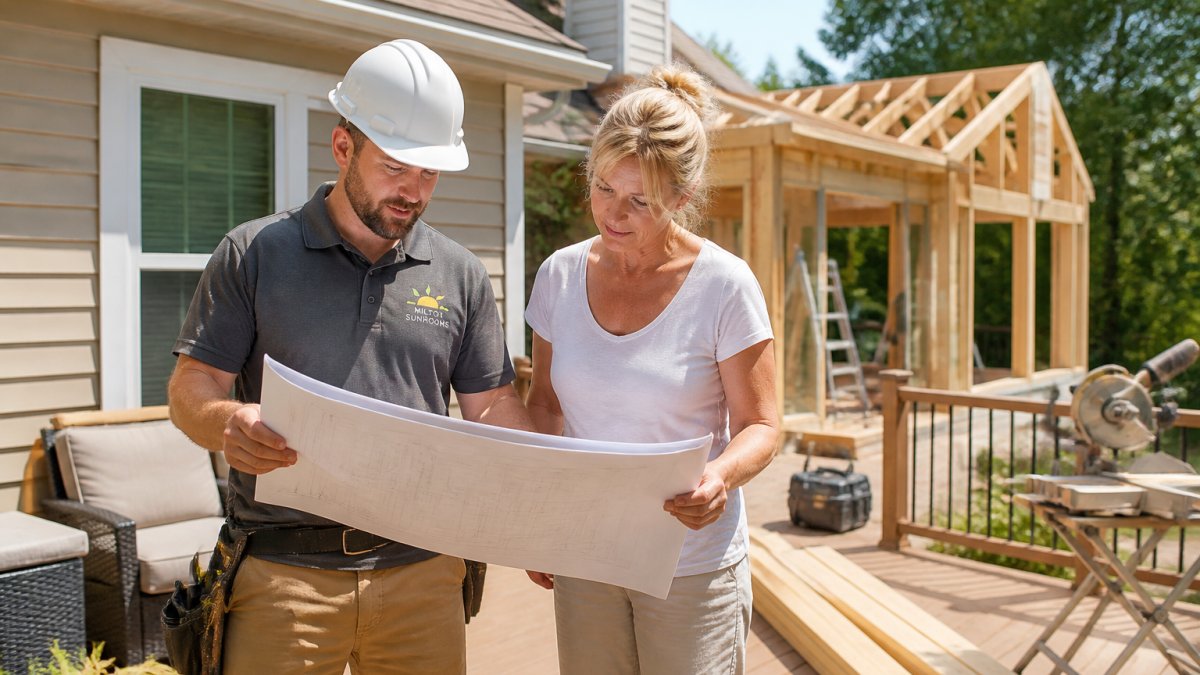
A typical sunroom project runs several weeks from signed contract to final inspection, though site conditions, permit review times, and material lead times move that number. Here is the sequence we follow on north Fulton projects.
Phase 1: Design, Engineering, and Permit Submission
Design and permitting come first, and this phase often takes longer than homeowners expect.
The load check is not a formality. A sunroom adds dead load (framing, glazing, roofing) and live load (people, furniture) to whatever is underneath it.
Permit review time varies by jurisdiction and by how complete the submittal is. A clean submittal with stamped drawings, a site plan, and a load summary moves faster than one kicked back for missing information.
Phase 2: Material Ordering and Lead Times
Once the permit is approved, materials get ordered, and this is where schedules slip most often. Custom-colored frames, specialty glazing, and insulated roof panels are manufactured to order, and lead times can stretch from a couple of weeks to well over a month.
Ask for the lead time in writing before you sign, and ask what happens if a product arrives damaged or wrong.
Phase 3: Demolition, Framing, and Rough-In
Demolition and framing come first, then roofing, electrical rough-in, insulation, and inspections. Glazing or screen installation follows, then interior finishes and final inspection. Expect noise, a staging area in your yard, and daily cleanup.
The rough-in sequence matters: electrical and any HVAC line sets go in before insulation and interior finishes, and each trade is inspected before it is covered up.
Phase 4: Glazing, Finishes, and Final Inspection
Glazing or screen panels go in after the frame and roof are weather-tight, followed by interior finishes, flooring, trim, paint, outlets and fixtures. The final inspection covers the completed assembly; attend the walkthrough if you can.
What to Expect in Terms of Disruption
Plan for a staging area and dumpster in your yard, and for noise during framing and roofing. Keep access clear and pets and kids away from the site during active work. Daily cleanup is a fair question to ask before you sign.
Materials, Glazing, and Climate Control for Year-Round Use
Materials and glazing decide whether your sunroom is comfortable in February or unusable in August. The question is not "which product is best" but which fits how you intend to use the room, your exposure, and your maintenance tolerance.
Start With the Use Case, Not the Product
The first decision is whether you want a three-season screened space or a year-round conditioned room. That choice drives the frame, glazing, and HVAC decisions, and changing your mind mid-build is expensive.
- Screened enclosure: lowest cost, best airflow, seasonal by nature. You get the outdoors with the bugs screened out, but you do not get conditioned air, and you will not use it in the coldest and hottest weeks.
- Three-season room: glass or hybrid glazing with limited or no HVAC. Extends the usable season on both ends but still depends on outdoor temperatures.
- Year-round conditioned sunroom: insulated glazing, insulated roof assembly, and properly sized heating and cooling. This is the option that appraises and functions as living area, and it is the most expensive because every component has to perform.
Frame Materials and What They Trade Off
Aluminum frames resist rot, hold up to humidity, and are low-maintenance, but aluminum conducts heat.
Heavier frame systems suit larger spans and higher-end designs, and wood or wood-clad frames offer a warmer interior look at the cost of more maintenance.
Ask what the frame is made of, whether it is thermally broken, and what the manufacturer's structural and thermal ratings are.
Glazing, Screens, and Storm Resistance
For year-round use, glazing matters as much as the frame. Low-emissivity glass and insulated roof panels reduce heat gain in summer and heat loss in winter.
Screened patio enclosures cost less but are seasonal; a conditioned sunroom with proper HVAC is a different product and investment.
North Fulton summers are humid and sun load on a south- or west-facing wall is significant.
Climate Control: Sizing and Integration
Heating and cooling a sunroom is not the same as the rest of the house. The room has a much higher ratio of glass to solid wall, so the load per square foot is higher.
Ask how the system was sized, whether it is zoned separately from the rest of the house, and what the expected performance is on the hottest and coldest days of the year.
Maintenance and Longevity
Every material choice carries a maintenance obligation. Aluminum and vinyl need occasional cleaning; wood needs periodic refinishing; screens tear; glazing seals can fail. Ask what the maintenance schedule is and what the warranty covers for each component, frame, glazing, and hardware often carry different warranties.
How to Vet Sunroom Additions Contractors and Spot Red Flags
Vetting a contractor comes down to verifying claims independently rather than trusting a polished website. The state license database and your local building department tell the real story.
Work through this checklist before you sign:
- Verify the license number on the state licensing board's public lookup
- Request a certificate of insurance and call the insurer to confirm it is current
- Ask for the permit history on three recent projects and confirm they were inspected
Read reviews for patterns, not stars. The FTC's guidance on consumer reviews explains what deceptive review practices look like, which helps you spot them.
Red flags we see homeowners miss: a large cash deposit request, no physical address, pressure to sign "today only" pricing, no written warranty, and reluctance to let you speak with past customers.
Conclusion
Choosing a contractor for sunroom additions is really a verification exercise, and the homeowners who do it well end up with a room they use every day instead of a leak they argue about for years.
At Milton Sunrooms, we have served homeowners across Fulton, Cobb, Gwinnett, Forsyth, Cherokee, Bartow, and DeKalb counties since 2008, designing and building custom sunrooms, porches, and patio enclosures that repurpose the decks and porches you already have.
Get a free quote from Milton Sunrooms and start with a design conversation about what your space could become.
Frequently Asked Questions
What makes a sunroom contractor reliable?
A reliable contractor holds a current state license, carries both general liability and workers' compensation insurance, and will put proof in writing without being asked. They give you a written estimate with line items instead of a single lump sum, pull the required permits in their name, and provide a workmanship warranty alongside the manufacturer's product warranty. Ask for two or three past projects in north Fulton you can look at, and check that the reviews you read mention finished work, not just friendly sales calls.
Do I need a permit for a sunroom addition?
In most cases, yes. A sunroom addition changes the footprint, load path, or electrical system of your home, and local building departments require a permit and inspections for that work. The permit also protects you: an unpermitted addition can surface during a home sale, an appraisal, or an insurance claim and create expensive problems. Ask each contractor whether they pull the permit themselves and who schedules the inspections. A contractor who suggests skipping the permit is telling you something important about how they work.
How long does it take to build a sunroom addition?
Expect the design and permitting phase to take several weeks on its own, since drawings, revisions, and the local review queue all add time. Once permits are issued, a straightforward project on an existing deck typically runs a few weeks of on-site construction, while a full addition with new footings, framing, and electrical work takes longer. Weather, material lead times, and inspection scheduling all move the date. Get the estimated start and completion windows written into your sunroom addition contract rather than accepting a verbal promise.
How do I compare sunroom contractor estimates fairly?
Line up the bids side by side and check that each one covers the same scope: foundation or deck reinforcement, framing, glazing type, insulation, electrical, permits, and cleanup. A lower number often means something was left out, so ask each contractor to explain what is excluded. Confirm the glazing and frame materials are named by brand or specification, not described as 'standard.' Finally, weigh the warranty and the contractor's local track record, not just the total. The cheapest sunroom contractor estimate is rarely the least expensive project.