 How-to
Does a Sunroom Increase Home Value? 2026 Guide
Table of Contents
- Does a Sunroom Increase Home Value? The Short Answer
- Sunroom Return on Investment: What You Actually Recoup
- Sunroom Addition Cost and What Drives the Number
- Four-Season Sunroom vs. Three-Season Sunroom: Value Differences
- Does a Sunroom Count as Living Space? Appraisal and Square Footage
- Appraised Value vs. Assessed Value vs. What Buyers Will Pay
- Estimating Sunroom Home Value Using Comparable Sales
- Conclusion: Renovate or Move?
- Frequently Asked Questions
Last Updated: October 18, 2026
Does a Sunroom Increase Home Value? The Short Answer
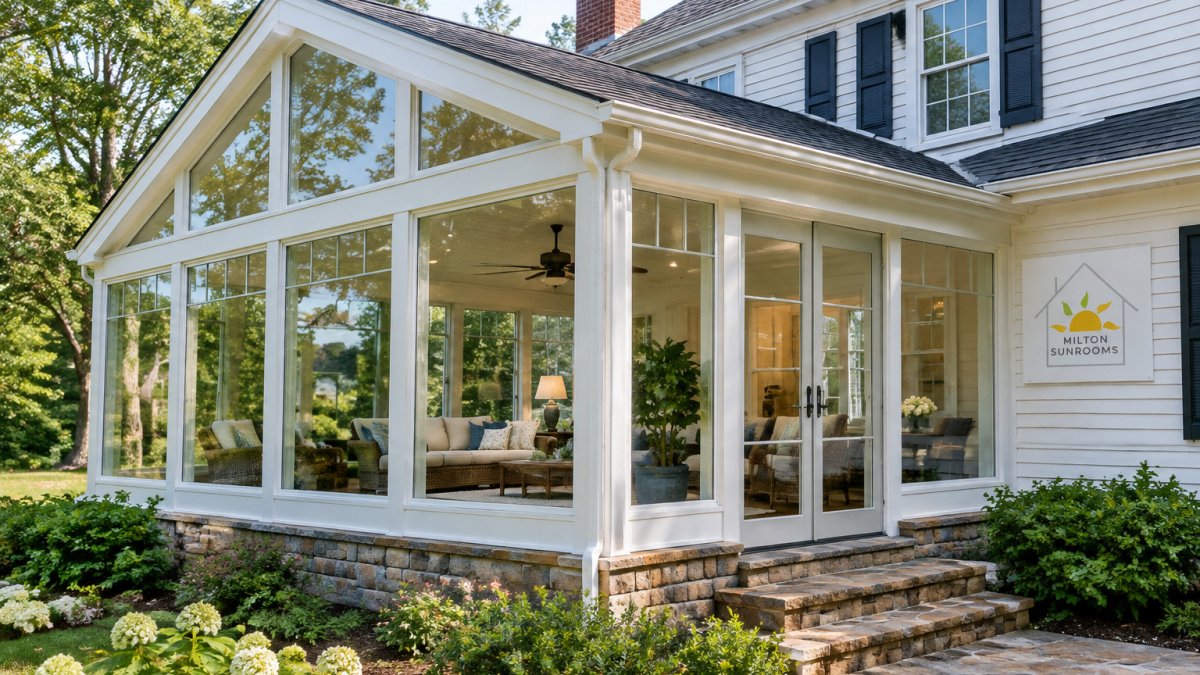
Yes, a sunroom usually increases home value, but not by the full amount you spend. The honest answer to "does a sunroom increase home value" is that it adds appeal and usable space, and buyers pay for both. Milton Sunrooms has built custom sunrooms, porches, and patio enclosures across north Fulton County since 2008, and we tell every homeowner the same thing: a sunroom is a strong selling feature, not a guaranteed dollar-for-dollar return.
Here is what most guides get wrong. They quote one national payback figure as if it applies everywhere. Value is local. It depends on your neighborhood, your buyer pool, and how well the room fits your house.
Below, we break down what you actually recoup, what drives the cost, and how to estimate your own return before you build.
Sunroom Return on Investment: What You Actually Recoup
Most homeowners recoup a meaningful share of a sunroom addition cost at resale, but rarely all of it. The rest of the value shows up as faster sales and stronger offers. To plan realistically, separate the return into three parts and price each one honestly.
1. The direct return. This is the dollars a buyer pays for the extra space. It is set by local comparable sales, not by what you spent.
2. The cost-recouped ratio. Contractors and agents often talk about the percentage of project cost recovered at resale. Treat any single national percentage with suspicion. The ratio moves with room type, climate, and neighborhood.
3. The indirect return. A bright, finished sunroom photographs better, shows better, and shortens days-on-market. That marketing edge is real money even when it does not show up as a line item in the appraisal. A faster sale avoids carrying costs, and a home that stands out can attract more than one offer.
A common mistake is expecting a sunroom to behave like a kitchen remodel. It does not. Kitchens and baths carry more weight with appraisers because buyers expect them in every home. A sunroom is a bonus feature, and bonuses get priced by what the local market will bear.
One more lever most guides ignore: how you pay for the project. If you finance the addition, the interest cost belongs in your return math. A room that recoups 70% of construction cost recoups less of the total outlay once financing is counted. Run the numbers on total cost of ownership, not just the contract price, before you decide the project pencils out.
Sunroom Addition Cost and What Drives the Number
Sunroom addition cost varies widely, so we won't quote you a fake range. Pricing depends on size, materials, foundation work, and whether we are enclosing an existing deck or building new.
Here is what moves the number:
- Size and footprint: larger rooms use more materials and labor.
- Existing structure: repurposing a sound deck or porch costs less than a new build.
- Materials: windows, insulation, and roofing grade change the total.
- Heating and cooling: a four-season room needs real climate control.
- Permits and site work: grading, electrical, and inspections add cost.
The good news: repurposing an existing deck or porch is often the most cost-effective path. You already have a footprint, so you spend less on structure and more on the finish.
For current pricing on your specific project, request a free quote from Milton Sunrooms. We build to your exact specifications, so the estimate reflects your home, not a generic package.
Four-Season Sunroom vs. Three-Season Sunroom: Value Differences
A four-season room generally adds more value than a three-season room because buyers can use it every day of the year. That year-round use is the difference between a feature and a gimmick.
| Feature | Three-Season Room | Four-Season Room |
|---|---|---|
| Use | Spring to fall | Year-round |
| Insulation | Basic | High-grade |
| Heating and cooling | Limited or none | Full climate control |
| Buyer appeal | Seasonal bonus | Finished living space |
| Relative value | Lower | Higher |
A three-season room is a screened porch with upgrades. It keeps the bugs out and extends your outdoor season. A four-season room is insulated, heated, and cooled, so it functions like the rest of the house.
That distinction matters at appraisal and at sale. Buyers pay more for space they can use in January. If you plan to sell, the four-season option usually earns back more of its cost.
Does a Sunroom Count as Living Space? Appraisal and Square Footage
A sunroom counts as living space only if it is finished, heated, cooled, and built to code. Otherwise, an appraiser treats it as an amenity, not as part of the home's finished square footage. This is where "does a sunroom count as living space" gets practical. The label affects your appraisal, your listing, and your insurance.
To count as finished living space, a room generally needs:
- A permanent foundation or approved structure
- Insulation and finished walls
- A heat source and cooling
- Electrical that meets code
- Permits and inspections on record
A three-season room rarely meets that bar. A four-season room often does, if it was permitted and built correctly.
How appraisers actually treat the room. Appraisers separate a home's gross living area (GLA), the heated, finished space above grade, from other areas such as porches, enclosed patios, and bonus rooms. A permitted, climate-controlled sunroom that is integrated with the house may be included in GLA or valued as a comparable finished area. An unpermitted or unheated enclosure is typically valued as an amenity, often at a fraction of the per-square-foot rate applied to GLA.
Why this matters beyond the appraisal. The classification also drives your listing. If you advertise finished square footage that the appraiser will not support, you invite a low appraisal and a renegotiation. Listing the room accurately as a four-season room with permits on file protects the sale. It also matters for insurance: an unpermitted enclosure may not be covered the way finished living space is.
A documentation checklist that reassures buyers. Most sellers never assemble this, and it is the single easiest way to defend the room's value at sale:
- The building permit and final inspection sign-off
- Approved plans and any engineering or foundation documentation
- HVAC specs showing the room is heated and cooled
- Insulation and glazing specifications
- Warranties on windows, roofing, and climate equipment
- Photos of the construction process, if available
- A written description of the room type (three-season vs. four-season) for the listing
One distinction worth keeping straight: appraised value, assessed value, and what a buyer will pay are three different numbers. A sunroom can raise your appraised value and your buyer appeal while barely touching your assessed value until the next reassessment. And a well-built room can push buyer willingness to pay above the appraisal if the right buyer walks in. The appraisal is a floor, not a ceiling, but only if the room's legal status and construction support the classification.
Appraised Value vs. Assessed Value vs. What Buyers Will Pay
These three numbers are not the same, and mixing them up leads to bad decisions. Appraised value is an appraiser's professional opinion of market value. Assessed value is the tax assessor's figure for property tax. What buyers will pay is the market's actual verdict.
They can pull in different directions:
- Appraised value reflects comparable sales and the home's condition.
- Assessed value often lags the market and follows the tax office's formula.
- Buyer willingness to pay depends on emotion, competition, and how the room feels in person.
A sunroom can raise your appraised value and your buyer appeal while barely touching your assessed value, at least until the next reassessment. And a beautiful sunroom can push buyer willingness to pay above the appraisal if two buyers fall in love with it.
What most reviews miss is that the appraisal is a floor, not a ceiling. The market decides the rest.
Estimating Sunroom Home Value Using Comparable Sales
The most reliable way to estimate what a sunroom adds is to study comparable sales in your own neighborhood. This is the method appraisers use, and you can borrow it.

Follow these steps:
- Find recent sales of homes like yours, within the last six to twelve months.
- Filter for sunrooms or similar additions. Look for four-season rooms, finished porches, and enclosed patios.
- Compare matched pairs. Find two similar homes, one with a sunroom and one without. The price gap is your best local estimate.
- Adjust for size and quality. A larger, better-built room adds more than a small basic one.
- Check the local real estate market. In a strong seller's market, buyers pay more for extras. In a slow market, they don't.
This beats any national ROI figure because it uses your actual market. A real estate agent can pull these comps for you in minutes.
Conclusion: Renovate or Move?
If you love your home and neighborhood, a sunroom is often the smarter move than selling and buying a bigger house. You skip the transaction costs, keep your location, and gain year-round living space that adds real value.
A sunroom will not return every dollar you spend, but it improves how your home lives and how it sells. The best results come from a well-built, permitted, four-season room that fits your house and your market.
Milton Sunrooms has served homeowners across Metro Atlanta and surrounding counties since 2008. We specialize in custom design and construction, repurposing existing decks and porches, and using quality materials built to last. Every project comes with our 100% customer satisfaction guarantee.
Get a free quote from Milton Sunrooms and find out what a custom sunroom can add to your home.
Frequently Asked Questions
How much does a sunroom increase property value?
There is no fixed percentage, but sunroom return on investment can be significant when the room is permitted, insulated, and integrated with the home. A four-season room with heating and cooling usually recoups more than a screened or three-season enclosure. The final number depends on your local real estate market, comparable sales nearby, and whether the room appears in the home's finished square footage. Ask a local real estate agent for a comparative market analysis before you commit to a budget.
Does a sunroom count as living space when selling a home?
It depends on how the room was built and permitted. An appraiser generally counts a sunroom as living space only when it is heated and cooled by the home's HVAC system, built on a permanent foundation, finished to the same standard as the rest of the house, and included in permitted square footage. A three-season or screened porch usually gets added as a separate line item at a lower value per square foot rather than folded into the main living area.
Can a poorly built sunroom lower a home's value?
Yes. An unpermitted addition, active leaks, single-pane glass, or a room that overheats in summer and freezes in winter reads as a liability to buyers, not an asset. Inspectors flag unpermitted work, and lenders may refuse to finance a home with unpermitted square footage. Construction quality, code compliance, and documented permits protect the value you are trying to add. Get the permit history in writing before listing.
Do buyers prefer four-season sunrooms or three-season sunrooms?
Buyers in most markets pay more for a four-season room because it functions as year-round living space and can be counted in finished square footage. A three-season room costs less to build and still adds buyer appeal, but it is usually valued as an upgraded porch. Climate matters: in areas with hot summers and cold winters, a four-season room with proper insulation, heating, and cooling holds its value better over time.