 How-to
How to Choose Sunroom Materials for Energy Efficiency
Last Updated: November 8, 2026
Quick Summary
To choose sunroom materials for energy efficiency, treat the room as one envelope: glazing, frames, roof, floor, and every seam. Read the full NFRC label, match glass to each wall's orientation, and insulate and seal the roof and floor as carefully as the windows.
- A U-factor of 0.30 lets roughly twice as much heat through as 0.15.
- Soft-coat Low-E suits hot, sunny rooms; hard-coat Low-E suits cold climates.
- Fiberglass frames hold their shape well across temperature swings but cost more than vinyl.
- In cold climates, use higher-SHGC glazing on south walls and lowest-SHGC glass on west and east.
- Add rigid insulation beneath the floor and seal joints at every frame and wall.
Table of Contents
- Start With the Whole Envelope, Not Just the Windows
- How to Choose Energy-Efficient Sunroom Windows
- Low-E Glass for Sunrooms: Solar Control Without Losing Light
- Comparing Sunroom Window Frame Materials
- Sunroom Roof Insulation and the Ceiling That Decides Comfort
- Floor Insulation, Air Sealing, and Thermal Bridging
- Matching Sunroom Materials to Climate and Orientation
- Plan Your Sunroom Material Selection With a Free Quote
- Frequently Asked Questions
Start With the Whole Envelope, Not Just the Windows
Most homeowners ask us which windows to buy. That is the wrong first question. Energy efficiency in a sunroom comes down to the whole envelope: glass, frames, roof, floor, and every seam between them. At Milton Sunrooms, we build custom sunrooms across north Fulton County, and the lesson never changes.
Here is the core idea. Heat moves through the weakest point in the assembly. Fix the glass and ignore the ceiling, and the ceiling wins. So before you shop for anything, treat the room as one system.
Three parts decide most of your comfort:
- Glazing: the glass itself
- Frames: what holds the glass
- Insulation and sealing: roof, floor, and joints
Below, we walk through each one, in the order that matters.
How to Choose Energy-Efficient Sunroom Windows
Energy-efficient sunroom windows are the biggest single lever on comfort, because glass is where most heat gain and loss happens. The best choice balances four things: how many panes, what coating sits on the glass, what gas fills the gap, and how the published ratings work together.
Start with orientation. A west-facing wall takes harsh afternoon sun. A north wall loses heat in winter. The same window can be right for one wall and wrong for another. Spending the glazing budget on the west and south exposures, where solar load is highest, is a sensible way to direct the budget.
Double-Pane vs. Triple-Pane Glazing
Double-pane windows seal two sheets of glass around a gap of air or gas. Triple-pane adds a third sheet and a second gap. More panes mean better thermal performance, but also more weight, thicker frames, and higher cost.
Our rule of thumb:
- Double-pane: a solid fit for mild climates and budget-conscious builds
- Triple-pane: worth it for cold winters, noisy sites, or rooms you want truly year-round
A common mistake is paying for triple-pane on a shaded north wall while leaving a west wall single-glazed. Spend where the sun hits hardest.
Reading U-Factor, SHGC, VT, and Air Leakage Together
The National Fenestration Rating Council (NFRC) label on a window carries four numbers that matter, and reading any one alone misleads you.
- U-factor measures heat flow through the whole window assembly, glass, frame, and spacer. Lower is better. A U-factor of 0.30 lets roughly twice as much heat through as 0.15, so the difference is real, not cosmetic.
- Solar heat gain coefficient (SHGC) measures the fraction of solar heat that passes through. A range of 0 to 1; lower means less summer heat. In a hot climate you want it low; in a cold climate a higher SHGC can mean free winter warmth.
- Visible transmittance (VT) measures how much daylight comes through. Higher means brighter. A very low VT blocks heat but also dims the room, the opposite of why most people build a sunroom.
- Air leakage measures how much air sneaks around the operable parts and frame. Lower is better, and it is the rating most buyers ignore even though a leaky frame can undo a great pane.
Read them as a set. A window with a low U-factor and low SHGC but very low VT will feel dim in winter. A window with high SHGC and high VT is bright but can overheat a west-facing room in July.
- West and south walls (hot climates): low SHGC, low U-factor, moderate VT
- North walls (cold climates): low U-factor, higher SHGC acceptable, high VT for daylight
- Mixed climates: mid-range SHGC, low U-factor, high VT, and prioritize low air leakage everywhere
The DOE guidance on window ratings explains these figures in plain terms. Learn them before you sign anything.
When comparing windows, ask for the full NFRC label and compare all four numbers on the same wall.
Low-E Glass for Sunrooms: Solar Control Without Losing Light
Low-E glass for sunrooms is a thin, invisible coating that reflects heat while letting visible light through. "Low-E" stands for low-emissivity. The coating cuts the heat that passes through the glass without making the room dark.
This is the upgrade most homeowners undervalue. You keep the bright, open feel that made you want a sunroom, and you block a chunk of the summer heat that would otherwise cook the space.
Two versions exist:
- Hard-coat Low-E: more durable, better for cold climates
- Soft-coat Low-E: better solar control, best for hot, sunny rooms
Some window manufacturers fill the gap between panes with argon gas, which slows heat transfer (High-Performance Window Systems: Glass). Ask whether it is included.
Comparing Sunroom Window Frame Materials
Frame materials decide how much heat sneaks around the glass. A great pane in a poor frame leaks at the edges. Four options dominate, and each has real trade-offs.
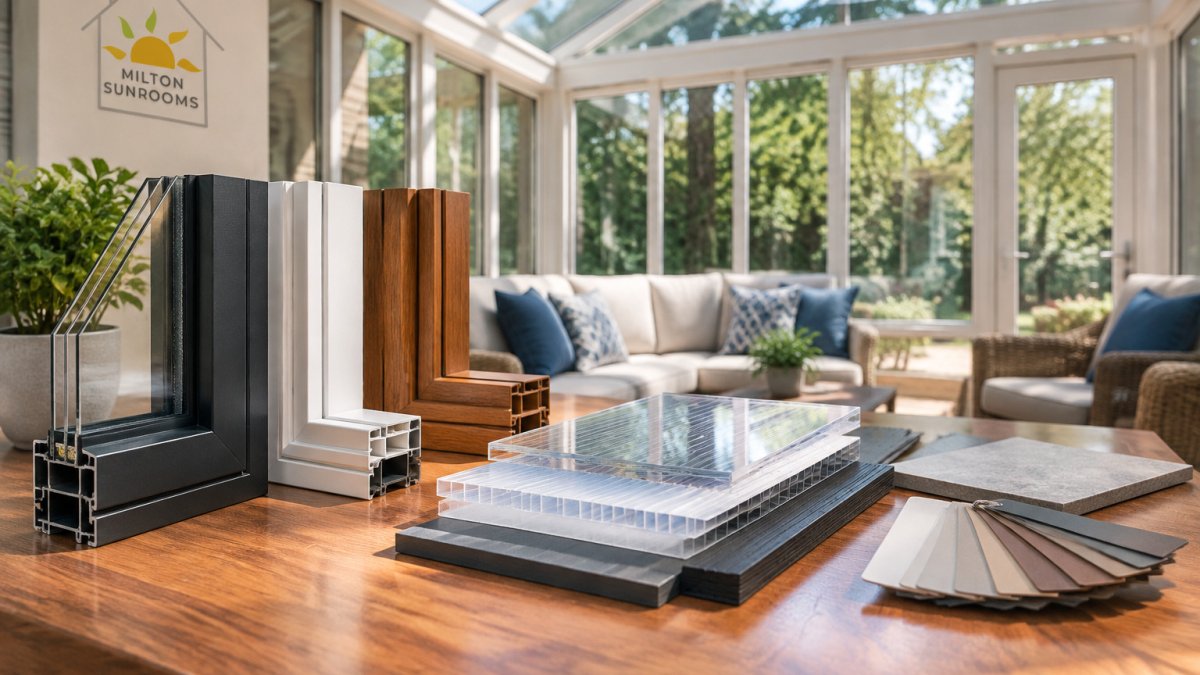
Vinyl, Fiberglass, Composite, and Foam-Insulated Frames
Vinyl frames are the budget pick. They resist moisture and need little upkeep.
Fiberglass frames hold their shape well across temperature swings. They cost more than vinyl but stay tight for years, which matters in a room that sees full sun.
Composite frames blend materials to balance strength and insulation. They sit in the middle on price and perform well in mixed climates.
Foam-insulated frames add a foam core inside the frame cavity, which helps break thermal bridging through the frame.
| Frame Material | Insulation | Upkeep | Best For |
|---|---|---|---|
| Vinyl | Good | Low | Tight budgets, mild climates |
| Fiberglass | Very good | Low | Full-sun rooms, big temperature swings |
| Composite | Good | Low | Mixed climates, balanced cost |
| Foam-insulated | Best | Low | Year-round comfort, cold or hot extremes |
For a wider look at how frames fit into the full build, see our guide to durable sunroom construction materials.
Sunroom Roof Insulation and the Ceiling That Decides Comfort
Roof insulation matters as much as the windows for comfort. Heat pours through an uninsulated roof in summer and escapes in winter. The ceiling often decides whether the room is usable in August.
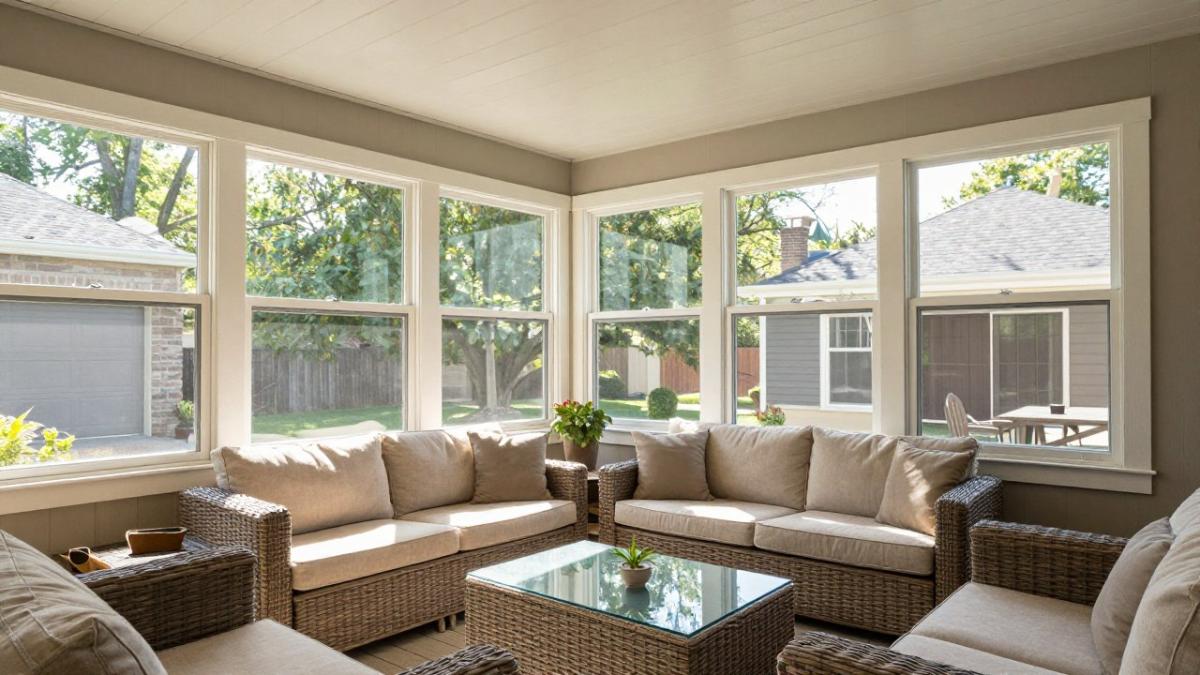
Insulated roof panels, a solid ceiling with insulation above, and sealed joints all work together. A ceiling fan helps move air, but it cannot fix a roof that radiates heat. Insulate first, then ventilate.
Skipping roof insulation can leave a room too hot to enjoy in summer. For practical fixes, read our tips on year-round sunroom temperature control.
Floor Insulation, Air Sealing, and Thermal Bridging
Floors and seams are the quiet leaks. A sunroom built over a deck or crawlspace loses heat straight down through an uninsulated floor. Add rigid insulation beneath the floor, and the room holds warmth far better.
Then seal the gaps. Air sealing means closing the small cracks where inside air escapes and outside air sneaks in. Around frames, at wall joints, and along the roofline, these gaps add up.
The third idea is thermal bridging. That is heat traveling through solid material, like a metal frame or an unbroken stud, instead of through insulation. Foam-insulated frames and a continuous layer of insulation break those bridges.
A simple checklist before you close up the walls:
- Insulation under the floor
- Sealed joints at every frame and wall
- Foam or insulated spacers at metal connections
- Sealed roofline and ceiling edges
Matching Sunroom Materials to Climate and Orientation
The right materials depend on where the room sits and which way it faces. A north-facing room in a cold climate wants to trap heat. A west-facing room in a hot one wants to block it. A sunroom has four exposures, and each one behaves differently.
Orientation by Orientation
- South-facing walls collect the most sun over the day, and in winter that gain is useful. In a cold climate, a moderate SHGC here can lower heating demand; in a hot climate, the same wall needs low SHGC and shading.
- West-facing walls take harsh, low-angle afternoon sun that drives peak overheating. This is where low SHGC and soft-coat Low-E earn their cost, and where exterior shading or a deep overhang pays back fastest.
- East-facing walls get morning sun, gentler than west, but still worth low SHGC in hot climates.
- North-facing walls get diffuse light and lose heat in winter. Prioritize low U-factor and high VT here; solar control matters less.
The Cold-Climate Tradeoff Most Guides Miss
Maximizing heat rejection is not always the goal. In a cold climate, a window with very low SHGC blocks the winter sun that would otherwise warm the room for free, and you end up paying to heat what the sun could have provided. A common pattern is to use a higher-SHGC glazing on south walls in cold climates and reserve the lowest-SHGC glass for west and east exposures. The reverse is true in hot climates, where every exposure benefits from solar control.
Putting the Envelope Together by Climate
A practical approach:
- Hot, sunny exposure: low SHGC glass, soft-coat Low-E, foam-insulated frames, insulated roof panels, and rigid floor insulation
- Cold exposure: triple-pane or high-performance double-pane, hard-coat Low-E, higher SHGC on south walls, strong floor insulation, and sealed thermal breaks at every connection
- Mixed climate: composite frames, double-pane with Low-E, insulated roof panels, and orientation-specific glazing rather than one glass everywhere
Orientation decides where to spend. Put the best glazing on the walls that take the most sun. Keep the shaded walls simpler. Our guide to sunroom climate control for hot summers digs into the hot-climate side.
Match the glass to the exposure rather than applying one glazing package to the whole room.
Plan Your Sunroom Material Selection With a Free Quote
Choosing sunroom materials for energy efficiency comes down to treating the room as one envelope. Get the glazing, frames, roof, floor, and sealing right together, and the room stays comfortable all year.
At Milton Sunrooms, we design and build custom sunrooms to your specifications, using quality materials. If you want to compare glass options in more depth, start with our guide to energy-efficient sunroom glass options.
Ready to plan your build? Contact Milton Sunrooms to schedule a free consultation and quote.
A comfortable sunroom starts with the right materials, chosen for your climate and your walls. Milton Sunrooms brings custom design, quality materials, and a satisfaction guarantee to every project.
Frequently Asked Questions
What materials are best for an energy-efficient sunroom?
The best combination is insulated glazing with a Low-E coating, a thermally broken frame such as fiberglass or foam-insulated vinyl, and an insulated roof and floor assembly. No single material carries the result on its own. A sunroom with premium windows but an uninsulated roof still loses heat through the ceiling. Match each part of the envelope to the others, then confirm the numbers on the window label and the insulation spec sheet before signing.
Are double-pane windows enough for a four-season sunroom?
Double-pane windows handle most of the load, but triple-pane or double-pane with argon gas fill performs better in cold snaps and reduces condensation on the glass. The deciding factor is the U-value, not the pane count alone. A well-built double-pane unit with Low-E coating and argon can beat a poorly sealed triple-pane. Ask for the rated U-value and compare it against the rest of the envelope before you decide.
What window frame material is most energy efficient?
Fiberglass and foam-insulated vinyl frames typically deliver the strongest thermal performance because the insulation inside the frame stops heat transfer at the edges. Aluminum frames conduct heat quickly unless they include a thermal break. Composite frames sit between the two on performance and often on price. Frame choice matters most at the corners and edges, where thermal bridging causes condensation and energy loss.
How do I reduce heat loss and overheating in a sunroom?
Address both directions. For heat loss, insulate the roof, ceiling, and floor, seal air gaps around joints and outlets, and choose frames with a thermal break. For overheating, use Low-E glass with a solar heat gain coefficient suited to the room's orientation, add roof overhangs or shading on south and west exposures, and include operable windows or a fan for cross-ventilation. A contractor should model both winter and summer performance, not just one.